Monday, October 13, 2025
Which countries prefer Beaujolais wine?
As shown in their graph (included below) the data note that the USA is by far the biggest market, followed by the UK, Canada and Japan. (Note that France is not listed in the graph, because it is not an export market for French products!)
However, this view of the Beaujolais data focuses on the size of the markets, not the amount consumed per person within those markets, which can be thought of as Popularity. In order to look at the latter, we need to take into account the population size within each country.
So, to calculate this, I divided the AAWE country total data by the Worldometer Population 2025 data for each country. However, this refers to all people, not just adults of drinking age. So, I then adjusted the data by the World Bank % people 0–14 years for each country.
This produces the final data as Euros of Beaujolais per Adult, within each country (excluding France). I have illustrated this in the next graph. This is very different from the AAWE graph (illustrating market size).
Note that Luxembourg and Belgium are way out in front in terms of Beaujolais popularity, followed by Ireland and Canada, and then the UK and Norway. Since Denmark and Sweden come next, we can conclude that Beaujolais is very popular in Scandinavia. (I quite like it myself, and I live in Sweden.)
Note that the UK, Canada and Belgium maintain a position near the top of the list in both graphs, while the USA has a very different position (it is a very large market in total).
Anyway, the makers of Beaujolais could focus their promotional activities on the countries as listed in the second graph, just as much as those in the first list.
Monday, September 1, 2025
Australia’s domestic wine market
Below, I have compiled the data for the past four reports.
The volume and value of the wine in the market went down and then up again during that time. This only partly reflects the decreasing pattern in global wine consumption (Global wine consumption really is at its lowest for a very long time), and Australia’s decreasing production. Also, Australia has been up to 10th largest global market, although it is now 12th.
The amount of imported wine in the domestic market was about 1/5th, but decreased at the end. So, the global market does make a considerable contribution to the Australian market.
The top-selling still wine varieties in the off-trade market by value varied considerably across the 4 years. Shiraz was, not unexpectedly, at the top for most of the years, with about 1/5th of the market. Two white varieties have been next during that time, with Sauvignon blanc being replaced as second by Chardonnay. Cabernet sauvignon has had about 1/10th of the market, although it was missing early on. Pinot noir was another popular variety, as was Pinot grigio.
Monday, May 26, 2025
What countries are best represented in Sweden’s wine retailer monopoly?
The point here is that government regulation of alcohol consumption is widely practiced around the world, including ownership of the alcohol-retail chain. For example, the history of Prohibition in the U.S.A. is intimately concerned with this topic. In that case, after ceasing the ban on alcohol retail of any sort, there were several subsequent suggestions of government control of alcohol sales, leading to the adoption of the current Three-tier System (A brief history of the three-tier system in America), in which distribution and retail must be carried out by separate companies.
Well, in Sweden’s case, there is an import/production group of companies, which is not hindered by the government, while the government formally owns the retail company (Systembolaget = The System Company). However, it seems to offer no impedance to how this company carries out its activities, in practice. This is all to the good for the (adult) populace, including me.
Import of wine is important in Sweden, because there are not a lot of local vineyards and wineries (Swedish wineries — who'd have thought it?). So, it is of interest to ask where most of the wines available in the shops do actually come from. That is what I have shown in this graph, based on the Systembolaget database, showing the number of individual wines (not their total volume), irrespective of vintage or bottle size. It shows 92.6% of the total of 16,386 available wines.
It can come as no surprise to any of you that the top three sources are the three biggest wine-producing countries in Europe, given that Sweden is part of the 27-nation European Union. So France (28.7% of the wines), Italy (25.0%) and Spain (11.6%) supply 65% of the Systembolaget wines between them. Perhaps slightly more surprising is that Germany (4.4%) and Portugal (3.5%) do not fare so well.
South Africa (4.5%) and the USA (4.0%) surprisingly do better than Australia (2.6%), which slightly bests Austria (2.4%). Given the current political ruckus, the US contribution may soon decrease, of course. South America also does not do so well (Chile 1.5%; Argentina 1.3%).
What I have left out of the graph is the contribution of both Sweden (2.2%) and Japan (0.6%). This is because they do not contribute much in the way of Vitis vinifera wines. Sweden does contribute 367 wines: 91 whites, 30 sparkling, 23 rosé, and 21 reds; but it also contributes 95 fruit wines, and 75 glögg (mulled wines). Japan contributes 94 wines, including 66 sake, and 22 fruit wines.
Anyway, this is enough for the current series of blog posts about wine retail in Sweden. However, things are likely to change at any time. For example, Georgia is currently a candidate country for joining the European Union, having applied for membership in March 2022 and officially been granted candidate status in December 2023. They seem to be keen to get their wines onto shelves around Europe (eg. Georgia backs UK growth with upped investment), presumably including Sweden.
Monday, May 19, 2025
The broad availability of United States wine in Sweden’s wine retailer
The obvious place to start is with simply how many different wines are currently listed in the Systembolaget catalog. It looks like this first figure.
Well, 672 wines is not necessarily a big deal to an American, but for a small European country it is pretty darned good. As expected, California (= “Kalifornien” in Swedish] dominates, with more than 80% of the wines, but Washington and Oregon also get a look in.
There are 471 red wines, 176 white wines, 12 rosé, 5 sparkling, 6 flavored / fruit wines, and 2 are mixed boxes. Of these wines, 112 are in the standard store assortment (ie. they should be in most stores, and their local supply is renewed), 197 are in the temporary assortment (ie. their supply is limited, and is not necessarily renewed), and 360 need to be ordered (ie. they are not in the shops, but will be delivered to your local store upon request to the importer).
Of these wines, 526 are in standard glass bottles, 88 are in lighter bottles, 28 are boxed wines (with plastic tap), 13 are in PET bottles, 11 are in cans, 5 are in cardboard packaging, and 1 is in a pouch. If you want even more details: 59 of the bottles have a screw cap, and 4 have a synthetic cork.
The wines are mostly relatively recent vintages, as shown in the next figure, but they do go back to 2009. The alcohol content is stated to vary from 7% to 19%.
In US dollars, the wines vary from $3.50 (187 ml) to $4.60 (250 ml) to $5.90 (375 ml) to $7.90 (750 ml), all the way up to $10,000. There are 180 wines (27%) retailing at $20 or less. The six most expensive packages are as shown next (NB: $US1 = 10 kronor). Note that the first item refers to a mixed box of 3 bottles (ie. $4,000 each bottle).
There are many different grape varieties available, as listed in the next figure. (Note that some of the names are actually synonyms).
If we consider what foods the wines are claimed to be suitable to accompany, then the list looks like the following figure. Note that Nut (“nöt” in Swedish) = Beef.
Finally, getting technical, if we define Lower carbon footprint as 0—400 g CO2e/l (carbon dioxide equivalents per liter) then 55 wines are stated to qualify; and we define Average carbon footprint as 401—650 g CO2e/l then 102 wines are stated to qualify; and Higher carbon footprint is 651—1475 g CO2e/l then 511 wines are stated to qualify.
So, all in all, I think that the Swedes do quite well in terms of wine from the United States of America. How long this lasts will be determined by how the current tariff ruckus is resolved, of course.
* The U.S. three-tier system was originally designed to prevent monopolies, indicating that Americans do indeed object to this business arrangement.
Monday, November 18, 2024
Wine import taxes in the United Kingdom (are very different from the USA)
As I noted in a recent week’s list of quotes (Quotes from famous people about wine and its role in our lives): “Wine makes every meal an occasion, every table more elegant, every day more civilized.” — André Simon. It also makes it more expensive, due to government taxes.
New U.S. president Donald Trump made a central part of his ‘Make America Great Again’ campaign the tenet of imposing a minimum tariff on all imports (Drinks firms brace as Trump elected US president). He has made it one of his first actions to affirm the new taxes on trade, including a 10—20 % tariff on all imports (How will Trump’s universal and China tariffs impact the economy?).
So, as a change from the current U.S. news, let us look at United Kingdom taxes, or duties as they call them (basically, excise duty = import tax; What is the difference between taxes, duties, and tariffs?).
In the U.K., all alcoholic drinks are taxed based on their alcohol by volume (ABV), meaning that beverages with a higher alcoholic percentage are subject to higher rates. This idea came into effect in August 2023 (The new alcohol duty system), as previously there had been four separate taxes, covering beer, cider, spirits, wine and made-wine.
Note that the U.K. duty is a fixed cost, based on ABV, irrespective of the cost of the wine itself (cheap or expensive) — this is a very different thing from the U.S. import duties, which are a percentage of the cost of the wine (and are likely to stay that way: Four more years ... of a non-wine drinker in the White House).
The British system for wine looks roughly like this (£1 = US$1.22):
ABV Excise duty per 750 ml
1% £0
2% £0.14
3% £0.21
4% £0.74
5% £0.93
6% £1.12
7% £1.30
8% £1.49
9% £1.92
10% £2.14
11% £2.35
12% £2.57
13% £2.78
14% £2.99
15% £3.21
However, this arrangement was too simple, or perhaps too complex, as the government decided that there would be a “temporary arrangement for wine”, up to and including the end of January 2025 (Work out how much Alcohol Duty you need to pay). The idea is that:
If you need to pay duty on wine with an ABV of between 11.5% and 14.5%, there’s a temporary arrangement from 1 August 2023 up to and including 31 January 2025. During these dates you must use an assumed strength of 12.5% when you work out the amount of Alcohol Duty for your wine.In other words, for 11.5—12.0% alcohol you pay more duty (£2.67) than you might expect, and for 13.0—14.5% you pay less. Go figure!
Anyway, the U.K. government has announced that it will increase tax on wine and spirits in line with inflation from February next year (Autumn budget: British government increases tax on wine and spirits). Wine at <12% may actually decrease in duty, but wine at greater % will increase (anything up to a 20% increase).
It should come as no surprise that taxes increase through time. We can look at the U.K. taxes, as they do not hide the information (Historic alcohol duty rates). I have plotted the data in the above graph, showing the taxes from 1995 through to 2017. It shows that at a minimum the amount of duty paid has pretty much doubled through time (ie. an increase to 200%).
For comparison, based on the Bank of England “Target” (i.e. average) inflation rate of 2% per year (Inflation: UK prices soar at fastest rate for almost ten years), the price of a bottle of wine has gone up to only 150% during the same period of time. So, taxes have increased faster than inflation.
It is therefore no wonder that Nearly half of UK drinkers plan to reduce their alcohol intake over the next year:
New research .... suggests that up to 48% of Britons intend to cut down on alcohol in the coming year. About 9% say they intend to stop drinking altogether. Those who are most likely to cut down are young, with 61% of 18-24 year olds planning to reduce or completely stop. This number increases to 68% for those aged between 25-34. As to why they’re planning to cut down, 34% said they wanted to save money, while an equal number said they wanted to cut down for their health.My wine life here, as an Australian migrant in Sweden, was much simpler back when the U.K. was part of the European Union (it ended its membership in January 2020), and I thus didn’t have to pay import duty to get Australian wine into Sweden from Britain, which was a good supply source.
Monday, October 24, 2022
Long-term trends in wine import and export value for the USA
Some countries are known in the wine world principally as exporters (eg. France, Spain, Italy, Portugal), while others are known principally as importers (eg. China, Japan, Netherlands, Sweden). There are some, however, who do a lot of both (eg. United States, Australia, New Zealand, South Africa). So, here I will look at the monetary value of wine imports versus exports specifically for the USA.
Let’s start with exports. Here is a graph showing the monetary value of wine exports from the USA over the past 30 years (the data are from the AAWE: Value of U.S. wine and beer exports, 1991–2021). As expected, the value has increased over that period of time. Indeed, the increase has been an average of 55 million USD per year, which is about 10% greater than the inflation-adjusted value over the same period of time. *
However, clearly the increase has not been steady, over at least part of that time. The increase does look pretty steady from 1994—2010, as I have indicated by my added straight line for that period (a linear regression, which accounts for 93% of the data variation). This was followed by a rapid increase in exports for 2 years, amounting to a 40% increase in value, after which things have remained pretty stable (or stagnant, if you are a pessimist). Interestingly, if we had used the 1994—2010 regression to forecast the situation in 2018—2019, we would have arrived at pretty much what actually happened in those two years — that is, the recent steady-state of exports has now completely nullified the rapid increase back in 2009—2011.
The increase in export value in 2010 has been noted before (Record high 2010 wine shipments make U.S. the world's largest wine-consuming nation):
In 2010, U.S. wine exports ... jumped 25.6% in value to an estimated $1.14 billion in winery revenues. Volume shipments rose 1.9% to 47.3 million nine-liter cases ... Changes in the dollar exchange rate, a gradually recovering economy and California's effective marketing and high wine quality have helped exports rebound.
Jon Moramarco provides a bit more detail: The period from 2009 to 2013 was driven by packaged wines as opposed to bulk wines. This was driven by an increase in average value per case, as opposed to significant volume growth. During this period, the USD was fairly weak, which made higher priced CA wines more competitive globally.
However, I am not sure how complete that explanation might be. Certainly, any optimism about the future was misplaced, as the exports simply stagnated for the next decade. Maybe the following scenario also played a part [thanks to Bob Henry for help here]:
In the robust economic times preceding the 2007 onset of the economic decline, vineyard owners / wineries optimistically planted more land, to meet rising wine sales demand. However, it took a few years for those new acres to yield a worthwhile crop; and those bountiful grapes then came to market during the 2008 Recession. Obviously, the public's appetite for “fine” wine then fell during The Great Recession; and, so wineries pivoted to selling into the export market to move all those new cases of unneeded wine.
Now let’s turn to imports. Here is a graph showing the monetary value of wine imports into the USA over the past 30 years (the data are from the AAWE: Value of U.S. wine imports, 1992–2021).
Here, also, there has been an increase in value through time, with an average increase of 210 million USD per year, which is about 25% greater than the inflation-adjusted value over the same period of time. * In this case, though, the increase has been steady over that whole time (as shown by my linear regression, which accounts for 98% of the data variation). However, wine imports took a bit of a hit in 2020; but they recovered to the regression-forecast value in 2021). [Note that the exports also took a bit of a hit in 2020.]
Importantly, wine imports have always greatly exceed exports. That is, the USA is massively a net wine importer, by value, not producing locally anything like the national consumption requirements for vinous beverages. However, the excess of wine import value over wine export value has changed through time. For example, back in the early 1990s, imports exceeded exports 6-fold, whereas in the early 2010s the excess was only 4-fold — it is currently closer to 5-fold.
This, of course, makes the United States one of the most-attractive consumer markets for wine producers worldwide. However, it has been reported that: foreign winemakers “have found it a frustrating and competitive market in which to enter and conduct business. The struggles are manifold, but, primarily, it’s a question of finding the right importer or distributor to help them navigate the system” (How to crack the U.S. import market). However, another issue seems to be the type of wines exported to the USA (Americanization or improvement? Tailoring wine for export). That is, should the local wines be adapted for the American market (eg. riper and richer wines, “international” grape varieties, use of new French oak)? This would be an unfortunate trend, should it become firmly established.
From the US perspective, it is reported that the wine industry has a greater impact on the national economy today than it did five years ago (What is wine's economic impact on the American economy?). With the increasing value of both imports and exports, things can only get better. It is reported that, for beer, spirits and wine, packaged imports grew 12% by value in the 12 months through August 2022, while packaged exports grow +20%, which is in line with the above data for wine. Apparently, The wine industry didn’t just weather the pandemic: it grew.
* Calculated based on the data provided in Historical inflation rates: 1914–2022. This amounts to an average inflation rate of 2.38% per year — since 2012, the U.S. Federal Reserve has targeted a 2% inflation rate for the US economy, and may intervene if inflation is not within that range.
Monday, June 27, 2022
Where does the USA get all of that imported bulk wine?
Many of you may not realize, however, that the USA also imports a lot of bulk wine. Indeed, it is allegedly the world's fourth largest importer of bulk wine (Bulk wine importation in the U.S.). Even worse, though, some of you may be quite surprised about where it comes from. For that reason, I will discuss it here.
I will start by illustrating the increasing volume of bulk wine imported into the USA over the past 16 years. The data come from Statista, and cover the volume imported from 2006 to 2021, inclusive. This first graph, in millions of liters per year, shows you that the amount of bulk wine imported has continued to increase until today, although there was an unusual peak in 2012.
Importing more than 400 million liters is an awful lot of wine. Indeed, according to Statista, in 2020 the USA imported 372 million liters of bulk wine but exported only 228 million liters of it, so that 63% more bulk wine was imported than exported. Which wine business is the USA in? [Note: financially, the USA is a net importer of wine in general; see: The monetary value of bottled wine imports versus exports]
The data I will use to explore the source of the imported bulk wine come from the Bulk Wine Club (set up by The World Bulk Wine Exhibition), via Vinex (Bulk wine imports into the United States). The next graph below shows the data for the top 10 import countries for the 12 months up to March 2022. The horizontal axis represents the total volume imported from each country, while the vertical axis represents the total cost of the wine imported. The red line gives an indication of a cost of $US 1 per liter — countries above the line are getting more than $US 1 per liter for the wine they supply, while those below the line are getting less.
Obviously, the wine came from the usual culprits, when considering wine production, notably Argentina, Australia, Chile, France, Germany, Italy, New Zealand, South Africa, and Spain. However, the biggest amount, by far, came straight across the border from Canada.
In terms of pricing, those countries located near the red line, such as Australia and Italy, got roughly $US 1 per liter for their bulk wine. However, France and especially New Zealand did much better than this (NZ = $3.26 per liter). On the other hand, Chile and especially Canada did much worse than this. Indeed, Canada got $0.26 per liter, while South Africa got $0.70, and Chile got $0.79. So, that Canadian stuff is pretty cheap, which may explain its apparent desirability.
Just in case you are doubtful about all of this, the final graph below shows the same data for the prior 12 months, up to March 2021. The numbers differ, but the pattern is roughly the same. Canada was out in front by a country mile.
The Canadian wine industry is not all that small, especially in Ontario (in the south-east) and British Columbia (in the south-west). Canadians rightly tout their bottled wines, of which icewine is a specialty. Mind you, more of it goes to China than to the USA.
However, bulk wine production in Canada is rarely mentioned (except as an importer). Presumably, it is trucked across the western border into California, where it ends up blended with the local stuff. * [Check out the Comment at the end of the post for more information.]
You can find out more about the current Bulk Wine Revolution through The World Bulk Wine Exhibition. They recently (June) had a get—together in the USA (Sonoma), and their next one will be in Amsterdam in November.
* Mind you, Canada is also reported to be the top export market for California wine (2020: US$ 424 million), well ahead of the United Kingdom (US$ 236 million) and the European Union (US$ 191 million). So, both the biggest export market and the biggest import market — now that is a trading partner!
Monday, February 14, 2022
The monetary value of bottled wine imports versus exports
Obviously, the difference between volume and value is the price per bottle (or box). Some countries habitually deal with cheap wines, while others are more up-market (eg. The USA imports more expensive wines than anywhere else).
The data come from Comtrade, the United Nations International Trade Statistics Database. I accessed all of the data available for 2020 in the category: "Wine; still, in containers holding 2 litres or less" (code 220421). So, we are dealing with bottled wine, rather than bulk wine — bulk exports are bottled in the receiving country, and sometimes also mixed with the local produce. Also, the data exclude sparkling or fortified wines.
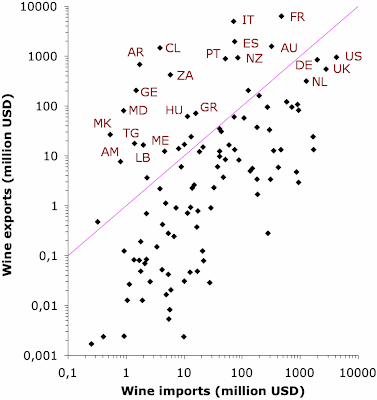
I have plotted the results in the first graph, which shows the total reported imports (in millions of $US) horizontally, and the total reported exports vertically, with each point representing a single country (as recognized by the UN). Note that both axes have logarithmic scales, so that the most active countries are dealing with up to 4 billion dollars of wine annually.
The pink line indicates a perfect balance between imports and exports. For those countries above the line, their exports exceed their imports, while for those below the line, imports exceed exports. Obviously, most countries are net importers of wine — only two dozen countries are net exporters of bottled wine.
In the next version of the graph, most of these exporter countries are labeled with their 2-letter codes, along with four other countries. There are six unlabeled countries only just above the line, which are (from left to right): Uzbekistan, Azerbaijan, Slovenia, Uruguay, Bulgaria, and Austria. So, for example, Uzbekistan does not export much bottled wine, but it imports even less — it is the second smallest importer by value (only Niger imports less).
France (FR) and Italy (IT) are the clear export leaders for bottled wine, followed by Spain (ES), which is the biggest exporter of bulk wine. Then come Australia (AU), and Chile (CL), followed by Portugal (PT), New Zealand (NZ), and Argentina (AR). Next are South Africa (ZA) and Georgia (for the latter, see: How much does wine contribute to total exports?).
Of these countries, Chile, Argentina, South Africa, and Georgia are not big importers of bottled wine, unlike the other labeled countries — the locals clearly rely on their local wines, for sustenance.
Both the USA and Germany (DE) have big wine production, but they still export less bottled wine than they import.* The United Kingdom (UK) and the Netherlands (NL) are not big wine producers, at all, and they thus import a lot of bottled wine. However, they both re-export a fair bit of it, to other places in Europe — for example, a lot of Australian wine comes into Europe via the UK. So, technically, they are pretty big exporters.
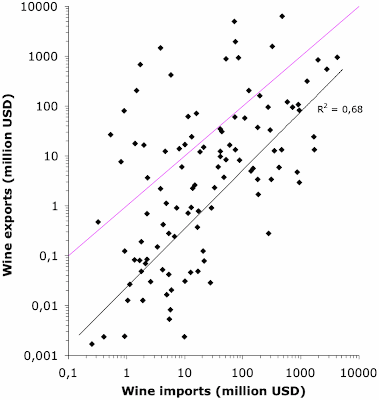
Finally, the third graph simply looks at the relationship between imports and exports for those countries where exports < imports. The black line is the regression line of best fit. The joint relationship between imports and exports encompasses 68% of the between-country variation in the data. It is not surprising that there is a simple (power) relationship between imports and exports, which will be based mostly on population size (more people means more of both imports and exports).
* The composition of US wine import values by country is detailed here.
Monday, January 31, 2022
Did US imported sparkling wine recover from the Great Recession?
This raises the general question as to how recovery of sales occurs, on those occasions when it does occur. The general scenario I will discuss is this: a growth of sales is interrupted by some adverse event, followed some time later by a return to growth of sales. Well, there are several ways that this return can occur, two of which are illustrated in the graph above.
- For example, the new growth in sales may be exactly the same as before the event, so that, in effect, the main thing the event did was delay things in time.
- Alternatively, the new growth in sales may be faster than it was before, so that the sales make up for lost time, and get back onto the original track (see the above graph). This nullifies the effects of the event, and may be called “full recovery”.
- The third possibility is that the new growth in sales may be slower than before, so that the sales never recover their former impetus, resulting in an ongoing net loss of sales (see the above graph).
The following graph shows the US$ value of the monthly imports into the USA of sparkling wine from France, from January 2002 to November 2021. The data are from the U.S. Bureau of Census (USA Trade Online), via the AAWE. Each point represents one month, while the pink line shows the continuous 11-month average value (ie. centered on each point).
Clearly, there was growth of sales until the U.S. Recession; and during 2008 and the first half of 2009 there was a serious dip in sales. According to Wikipedia, the Great Recession began officially in December 2007 and lasted until June 2009 (Great Recession) — the US stock market crashed during 2008, and US unemployment reached 10% in 2009 (The Great Recession of 2008 explained with dates).
The growth of wine sales then recovered, until the end of 2019, when a second dip occurred. At this time, the US government had decided to apply a 25% tariff on French, Spanish, German and British wine, as part of the Airbus subsidies dispute (How will the new US tariff impact the wine market?). This was then resolved somewhat by a truce (US and France agree tariff truce for a year). This latter dip shows a full recovery of previous sales almost immediately.
However, the first dip is another thing altogether. There is clearly a long and protracted delay in recovery. My question here is a simple one: did sales growth from August 2009 until December 2019 occur at the same rate as it was previously (from January 2002 until December 2008)? The alternative seems to be that the growth rate was faster, indicating a recovery of sorts.
To answer this, I need to define the relevant subsets of my dataset, which are shown in the next graph. The data for the first increase in sales are shown in pink, and for the second growth in blue. The dark points (the dips) are not included in the calculations.
I then ran separate regression analyses of the two subsets of the data, assessing linear growth of sales through time. The resulting equations are listed on the graph, with the top line representing the first growth phase and the bottom line the second growth phase. The two regression slopes are different, with the one for the blue data being higher than for the pink. So, I conclude that there has been recovery of sales impetus, albeit a slow one.
To make this concrete, back in August 2009, the expected forecast of sales would have been US$49.0 million (based on the top regression line), but was in fact US$29.6 million (based on the bottom regression line). This is our estimate of how big was the immediate effect of the Recession on French sparkling wine sales — a hefty reduction of 40%. In contrast, the expected forecast of sales for January 2022 would have been US$89.9 million (based on the top regression line), but was in fact US$75.5 million (based on the bottom regression line) — a reduction of only 16%.
So, it seems that, in this case, “recovery” of sales growth occurred to the tune of 3/5th. The US is not yet “back to where it was” before the Recession, as far as the French are concerned, but it may yet get back the remaining 2/5th, if things continue as they are. How things do proceed depends, of course, on the current pandemic. For example, note that in the graph the sales for October and November 2021 set new record highs (Champagne exports hit record high, bouncing back from Covid slump).
Monday, December 27, 2021
The value of exporting wine to Russia
The Russians do make their own stuff, mostly in the North Caucasus region (the very south-west of the country). Oddly, they do also seem to want to call their sparkling wine “champagne”, even when they make it themselves, rather than the French doing it (Only wines made in Russia can be called champagne under new Putin law).
As well as drinking their own wine themselves, they do export some of it. Indeed, in 2020 this amounted to 5.1 million liters or US$9.9 million (according to the UN Comtrade: International Trade Statistics database). It went to neighboring countries like the Ukraine (2.8 million liters, or 55%), China (12.5%), Georgia (11.5%), Kazakhstan (7.5%), Belarus (6.5%), Moldova (3%), Latvia (2%), and Kyrgyzstan (1%). This is why most of you have never tasted any of it.
However, their climate is not the best for growing grapes (not yet, anyway), and so they do import quite a bit of wine. The AAWE recently listed the top 20 sources of import for 2019 (sourcing their data from Comtrade), which accounted for 93% of the total import volume (657 million liters) and 94% of the total value (US$1.15 billion). Most of the wine comes from only a few places, with the Big Four countries accounting for 68% of the volume and 74% of the value.
I have plotted the data in the graph, where the horizontal axis shows the volume (note the logarithmic scale), the vertical axis shows the price per liter, and each point represents one of the 20 import countries. The pink line represents the average total value (ie. volume x price) — those countries to the right of this line contributed more than the average value across all countries. So, the vast majority of the wine value comes from Italy (IT), France (FR), Spain (ES) and Georgia (GE).
Note that there is more than one way to skin the proverbial cat. For example, Spain (ES) provides the largest volume, but at a very low price point, whereas France (FR) provides only 40% of that volume, but at 2.5 times the price — this results in roughly the same total value of wine imported from each of the two countries.
Uzbekistan (UZ) and Moldova (MD) provide the cheapest wine, while New Zealand (NZ) and Austria (AT) provide the most expensive stuff. The USA (US) and Australia (AU) provide less wine than New Zealand but more than Austria, and at a cheaper price point. Chile (CL), Portugal (PT) and South Africa (ZA) follow most of the Big Four countries in price, but with considerably less volumes.
Russia is the 9th most populous country on the planet, with c. 40% of the population of the USA; so this is potentially a large export market for the wine industry. It may be a better bet than the other large countries (India, Indonesia, Pakistan, Nigeria, Bangladesh), which are not known as big wine consumers. * Unfortunately, Russia may not be politically or economically any more reliable than China has turned out to be, as a trading partner. Nevertheless, it may be worth a quick look by the Australians, given their loss of the China market (China slams Australian wine with 218% tariffs for 5 years).
* The USA is the third most populous country, after China and India. There has been a continuous rise in per person wine consumption in the USA from the end of Prohibition, finally resulting in the US taking the global lead in total wine consumption from the year 2010 onward (The rise of the USA as the world's biggest wine consumer ).
Monday, September 13, 2021
How faithful are American value-wine drinkers?
The scandal in American wine is, apparently, that: “the United States produces distressingly few globally competitive wines costing $20 or less.” This is in spite of the report that US wine reached an average of $10 per bottle for the first time back in 2017. That is: “Consumer thirst for higher-quality wine has pushed the average price for the equivalent of a standard-sized 750-milliliter bottle of wine sold by US retailers passed $10 a bottle.”
I am interested in wines at less than $20-per-bottle because that is the price I try to target for good-value wines (ie. it is possible to find good wines at this price, but you have to do a bit of searching). As I have noted before (Finding inexpensive wines), the searching can be done, in the USA, with the aid of web sites like the Wine Curmudgeon and the Reverse Wine Snob.
In terms of good-value wines in the price range that we are discussing here, these sites have been known to suggest brands like McManis, as well as Castle Rock, Chateau Ste. Michelle, and the Robert Mondavi Private Selection. These wines are even exported to places like Sweden, as I can attest (Sweden is currently the 9th biggest US export market by value).
These recommendation sites do not, of course, recommend things like Charles Shaw wines, whose history has been recently reviewed (Two Buck Chuck and the lure of bargain wine). This wine was originally made by the Bronco Wine Co. as a private label for Trader Joe’s; and, at a price of $1.99, it has apparently sold almost one thousand million bottles since 2001. As noted in the article:
Almost 20 years later, Two Buck Chuck is still here. It still sells for $1.99 in California, though it has risen as high as $2.99 over the years, while shipping costs have raised the price elsewhere in the country to as much as $3.99. Still, even at that price, it costs about half as much as the average bottle of wine.As pointed out above, it is actually notably less than half of the average, which is now $10. Much closer to half the current average price is: The cheap wine that turned Americans on to fine wine, the E&J Gallo Hearty Burgundy, which retails at $9 for a double bottle. Launched way back in 1964, it was marketed as a thirst-quenching dinner wine of consistency and reliability. It quickly came to dominate the market, selling two million cases annually.
In terms of wine production, E&J Gallo, Constellation, The Wine Group and Treasury Wine Estates (originally from Australia) are currently the major producers in the USA. This does not at all mean that the best-selling brands come from all of these companies, as they each own oodles of wine brands. According to Statista, the five leading table-wine brands in the USA in 2020 (in million U.S. dollars) were:
Finally, it is clear that a lot of the inexpensive wines in the USA come from elsewhere in the world, perhaps supporting Michael Franz' assertion. Or, as Don Kavanagh has put it:
If we were to tell you that you could get a 97-point wine for less than the price of a steak, you'd probably think we were crazy — but you can. Okay, you might have to go to Europe to buy it, which would add considerably to the cost of the bottle ...The big-selling imported wines in the USA tend to be somewhere near the average bottle price. The American Association of Wine Economists periodically lists America's top imported wine brands, in terms of volume. It is therefore instructive to compare the various lists over recent decades (eg. VinePair). The most recent compilation (AAWE) looks like this (in thousands of 9-liter cases) for the four lists over the past 20 years:
Only the top 10 brands are listed each year, but there are 24 brands in total, across the 20 years. Only Concha y Toro and Riunite appear in all four lists, with Cavit and Lindemans appearing three times each. This does not show a lot of long-term faithfulness by American cheap-wine drinkers (60% of the brands appear in only one list).
In terms of dominance, back in 1991 Riunite accounted for 36% of the wine sold by the top-10 brands, but it has faded since then, accounting for 5—15% of the wine. Mind you, it is still the biggest wine company in Italy (Italy's biggest companies). In 2011 and 2019, Yellow Tail also managed to dominate, accounting for 36% and 30%, respectively, of the wine sold by the top-10 brands.
In those latter two years, Cavit managed 15% of the wine, in second place. However, back in 2001 the top brand was Concha y Toro, which accounted for only 16% of the wine sold by the top-10 brands. This indicates a much more even marketplace for wine importers in the USA, at the turn of the century, unlike at any other time.
Meanwhile, in the distribution tier of the US three-tier alcohol system, three companies — Southern Glazer’s, RNDC/Youngs and Breakthru Beverage — appear to control close to two-thirds of all wine sales in the USA, after a decade of severe consolidation. This indicates as much industry dominance as is present in the wine imports. Consumers do not, of course, show any faithfulness towards distributors.
Monday, July 26, 2021
This is who drinks the priciest champagne
United States (501.9 million euros), United Kingdom (338.2 m€), Japan (270.8 m€), Germany (167.4 m€), and Italy (146.8 m€).
But this does not really tell us much, because the USA has 5 times as many people as the UK, and 2.5 times as many as Japan, so we expect greater imports of most things. So, this does not tell us much about the relative propensity for drinking Champagne, among these countries' denizens. What we need to do is look at how much the people are spending, individually. We do this by working out the price being paid per person, not per country.
My data for the population size of these countries comes from Worldometer. I simply divided the AAWE numbers by the Worldometer numbers. This leads to the country rankings shown in the graph. Each point represents one of the top 30 Champagne-importing countries, ranked horizontally by total value (million euros) and vertically as value per capita (euros per person).
The correlation between these two rankings is not high (0.25), indicating that the price per person is very high in some places, even if the total volume imported is small.
For example, note that the #1 importer (the USA) drops to 20th place per person, while Luxembourg jumps from 29th for total volume to 1st per person. Indeed, Luxembourgers spend 10 times as much on Champagne as those cheap Americans; and the Belgians and Swiss do not do too badly for themselves, either. The full list of per capita expenditure is included at the bottom of this post.
Note that other large importing countries also move down the rankings after accounting for population size, such as China. On the other hand, some smaller countries move up the list, notably Sweden, Denmark and Norway — those Scandinavians certainly do themselves well for sparkling wine.
Some countries hardly change ranking, of course, including Australia, the Netherlands, and Taiwan. Interestingly, the people of Hong Kong spend nearly twice as much per person on Champagne as do the Singaporeans. There might be a message there, although I am not sure what.
We could, of course, compare this per-capita Champagne list to the AAWE list of overall per-capita expenditure on wine. The latter list places most of the same countries at the top of the ranking, including Switzerland, Belgium, the Scandinavian countries, and the United Kingdom. However, Luxembourg is nowhere to be seen, and instead we have Slovenia. So, the Luxembourgers must specialize in Champagne, while the Slovenians apparently prefer some other sparkling wine, instead. Perhaps the Luxembourgers celebrate more often than do the rest of us? Perhaps there is something wrong with the local Crémant de Luxembourg?
Anyway, recent reports note that: Booming Champagne could reach pre-Covid levels by year-end, along with: Sparkling, pricier wines lead in retail sales. Unlike the rest of the wine industry, things seem to be looking reasonably good for the sparkling-wine makers in eastern France, even if those Champenois are annoyed with the Russians, just at the moment, and the organic farmers are having trouble with downy mildew.
Per capita expenditure on Champagne in 2020:
|
Country Luxembourg Belgium Switzerland Hong Kong Sweden Denmark United Kingdom Australia Norway Singapore Netherlands Austria Finland New Zealand Italy Japan Germany Ireland United Arab Emirates United States Canada Spain Portugal South Korea Taiwan South Africa Russia Mexico Nigeria China |
€ / person 14.70 12.20 10.87 6.13 5.32 5.10 4.96 4.89 3.64 3.32 2.94 2.84 2.60 2.52 2.43 2.15 1.99 1.93 1.85 1.51 1.38 1.28 0.88 0.57 0.55 0.26 0.24 0.12 0.06 0.03 |
Monday, May 17, 2021
Where China get its wine, these days
In one sense, China is no different to other Asian countries, in that wine is increasing in the mix of alcohol beverages, and beverage production has not kept up with the increase in demand, so that imports are needed to fill the gap (Asia’s emergence in global beverage markets: the rise of wine).
Bottled wines dominate China’s imports, making up more than 90% of the value each year; so, we are talking about a fine-wine market. As such, we would expect the wines to be sourced from well-known fine-wine regions, from around the globe. The first graph shows the top eight importers by value, for the past five years. [The data were compiled from various online reports, but the origin in all cases was from the Chinese Custom's Office.]
Note that the vertical scale is logarithmic, so that we can clearly see the lower-ranked countries. These have been followed by Germany, Portugal, and South Africa, in various orders depending on the year.
Note, first, that there has been a general decline in the value of imported wine since 2018, as discussed in my previous post (due, for example, to the slowing of the local economy). This has affected all of the importing countries except Argentina. This may indicate an increasing interest in Malbec wines, and seems to bear out earlier hopes (Can China ‘save’ Argentina’s wine industry?).
The USA has had a rapid decline since 2018, presumably due to the ongoing trade war with China (US wines latest victim of trade war with China’s 93 percent tax). Naturally, there are moves afoot to try to change this (Feinstein, Padilla ask Biden admin to get China to lift tariffs on U.S. wines).
France has also had a rapid decline since 2018, having been the top importer until then, in both value and volume. The French wine was apparently being replaced by wine from Australia, which showed a steady increase until 2019, when Australia became the top importer. Since then, the trade war with Australia has decimated wine imports, which in 2021 have been very little from that country (see the graph in: Wine exports fall four percent to $2.77 billion). The Australians are not taking this lying down, of course (Australia is taking China to the World Trade Organisation over its intensifying trade war), and the USA has pledged to help (US Secretary of State says Australia will not be left alone to face China coercion). In the meantime, France has now returned to number one in 2021 (France leapfrogs Australia to become top wine supplier to China), although Chile, Spain, Italy, and the USA are all expected to benefit, as well (How will markets adjust to China’s new tariffs on imports of Australian wine?).
It is worth noting that Spain and Italy, the other two European nations on the list, have run pretty much neck-and-neck, a long way behind France. China has apparently been Spain's fifth largest wine market (Spanish wine in China), while it has been somewhat less important to Italy — 14th by volume and 13th by value (Italian wine exports by destination).
Also, Chile, the other South American country, has consistently been ranked third in imports, a long way behind France and Australia, although China has been its biggest export market since 2016 (China's flourishing wine market becomes top export market for Chilean vineyards). It is poised to replace Australia on the list if things continue the way they are going this year (Why Chinese tipplers like Chilean wine).
Finally, it may be worth taking a quick look at wine exports from China, as shown in the second graph, for export volume since the 1980s. Domestic wine consumption relates to imports net of exports, of course.
You may make of this what you will. I have not seen any discussion of the three distinct peaks of wine exports (1993, 2006, and 2014–2016). Meanwhile, the wine export quality has been reported to be variable (Chinese wine — ready to export?).
Monday, January 27, 2020
US states do not import wine from the same places
There do not seem to be complete data freely available regarding his question. However, a recent report from Wine Intelligence, on Opportunities in the US Market for Portuguese Wines (October 2019), does provide data for some of the most populous states: California, Texas, Florida, New York, Illinois, New Jersey, and Massachusetts. The first four of these states have the largest populations, accounting for 33% of the nation’s people between them, and the seven states together make up 42%. So, these data are worth looking at, even though they are incomplete.
The data come from the Vinitrac survey, and refer to the percentage of respondents who stated that they had consumed wine from each of 15 named regions in the previous 6 months. The data are shown in this 3-D bar chart, with the 15 wine-producing regions along the bottom, the 7 import states along the right, and the respondent percentage vertically.
The patterns are very similar across the seven states, but there are notable differences. The rank-order of the wine regions does differ between the US states, although Californian wine is most preferred in all of the states, with Italy ranking second, and Slovenian wine ranking last (of these 7 regions only).
The most obviously different state is California, where the people clearly have a greater preference for Californian wine (78% of respondents) than do the other people (c. 66% of respondents). Perhaps this does not surprise you? This extra consumption is counter-balanced by less consumption of wine from the other US states, along with Italy and France.
French wine is preferred to non-Californian US wine in California, Florida, New Jersey and Massachusetts, but it is the other way around in Texas, New York and Illinois. Spanish wine ranks next, everywhere, followed by Australian wine.
Chilean wine is more popular than Argentinian wine in all of the states except Massachusetts. German wine does slightly better than New Zealand wine, except in California and Massachusetts. Portuguese wine does better in New Jersey and Massachusetts than it does elsewhere (twice as well as in Texas and Illinois).
The wines of South Africa are not as popular in Texas as they are elsewhere. Canadian wines are surprisingly popular in New York, while Greek wines do best in New York and Illinois.
It is interesting to note the presence of Slovenia in the survey. It has recently been noted that Slovenian wine is fast gaining recognition in the USA, although it clearly has a long way to go to challenge any of the other wine-producing regions in popularity.
Mind you, this whole situation is currently under threat from Mr Trump, who wants to remove Italy, France, Spain, Germany, Portugal, Greece and Slovenia from these lists (see Alder Yarrow's compendium: The disastrous tariff edition). This seems very much like: Cutting off your nose to spite your face.