Showing posts with label Grapes. Show all posts

Monday, July 14, 2025

Climate change and its effect on grape cultivation

Modern viniculture currently has two major threats: changing attitudes by generations towards wine consumption, and changing vineyards in response to climate change. The latter is properly part of viticulture, and I will look at it here.

This topic was something that was long addressed by Dr Richard Smart, who died recently (Richard Smart: the man who changed wine):
Smart addressed the impact of climate change on wine regions, suggesting that some areas might become too hot for certain grape varieties, necessitating adjustments in vineyard management and variety selection. He consulted to vineyards to help them adapt by taking measures such as finding suitable new grape varieties for their regions.
He was absolutely right; and this is now of particular concern in Europe: Why Europe is the world's fastest warming continent. Two recent research publications by Elizabeth M. Wolkovich have been more specific, at a global scale. The grapevine characteristics included in her scientific analyses are shown in the first figure.

The characteristics affected by climate

The more detailed of her two articles looks at Uneven impacts of climate change around the world and across the annual cycle of winegrapes (PLOS Climate 539):
    Anthropogenic [human affected] climate change has uneven impacts across the globe and throughout the year. Such unevenness poses a major challenge for human adaptation, especially for agricultural and other managed systems.
     Here, we use recent phenological models with a dataset of mean phenology for over 500 cultivars (varieties) to estimate climatic changes in growing regions across the globe for a major perennial crop that has been highly affected by climate change: winegrapes.
     We examine a suite of grower-relevant metrics, including temperatures during budburst, throughout the growing season and temperatures and precipitation surrounding harvest. We find that climate change has impacted all regions, especially for heat metrics across the full growing season (GDD [see the below graph], maximum temperature and days above 35°C). By far the largest shifts, however, are in European regions, where the number of hot days (>35°C) and maximum growing season temperatures are several standard deviations higher than before significant anthropogenic climate change.
     Climate change impacts have thus been highly uneven across the world’s winegrowing regions and the impacts are variable across the growing season.

An example of one of the important changes

The other paper is a review article: The problem of terroir in the anthropocene (Harvard Data Science Review, 7-2). She is particularly concerned about the way in which climate change effects the characteristics that we usually associate with wine terroir. Note also that the Anthropocene is a term used to refer to the period of time during which humanity has become a planetary force of change:
     Climate is integral to the concept of terroir. With anthropogenic climate change, the terroir of the world's winegrowing regions is changing, and will continue to change for decades or centuries.
     Here I show how variety phenology — the timing of major growth and reproductive events including budburst, flowering, veraison, and harvest — is a critical component of terroir and one that is becoming increasingly mismatched due to climate change.
     The clearest signal of this shift comes from the earlier harvests of wine grapes over the last several decades with harvests 2–3 weeks earlier in France and other regions. These earlier harvests have reshaped the climatic profile under which berries ripen, leading to wines with higher alcohol and shifted phenolic and aromatic attributes.
     But these shifts also hint at a major way to adapt viticulture to climate change — through matching variety phenology to the current and future climates of established winegrowing regions. Here I show how variety phenology — the timing of major growth and reproductive events including budburst, flowering, veraison, and harvest — is a critical component of terroir and one that is becoming increasingly mismatched due to climate change. I outline how growers and researchers alike can leverage current and new data to help develop a framework to shift varieties with climate change.
So, the purpose of these two articles is to point a practical way forward, which we would be best advised to heed. What cultivar we grow where (and thus we value the subsequent wine) will need to be re-evaluated, sooner rather than later.

Monday, November 20, 2023

The origin and diversification of cultivated grape-vines

I spent my professional life as a biological scientist in universities. I specialized in three areas:
  • fire ecology — the effects of fire (intensity, frequency, season) on the native plants of eastern Australia
  • phylogenetics — the long-term evolutionary history of plant species
  • phylogenetic data-analysis methods [see my previous blog: The genealogical world of phylogenetic networks].
It may therefore seem a bit odd that these are topics that I have rarely written about in this current blog, with respect to the wine industry, although they all apply to some extent.

This is not from lack of interest in either the phylogenetics or fire ecology of grape-vines, as I do read all of the literature when it appears. It has more to do with the fact that these are complex topics, from my point of view (e.g. the wildfire effects on the wine industry in California in 2020), and they would need to be simplified considerably if I am going to write about them for the general public (in this blog).

Today, however, I am going to try to explain a recent scientific publication about the domestication of grape-vines from their wild progenitors.

Carving, Egypt 1340 BC

The grape cultivars that we currently use in agriculture are (almost) all considered to be a single species (called Vitis vinifera; one of c. 80 species in the genus Vitis). However, their wild ancestors were grouped into a species that we call Vitis sylvestris. Sounds simple doesn’t it? However, even this is actually complicated, because some people think that there is only one species, with two subspecies (Vitis vinifera ssp. vinifera and Vitis vinifera ssp. sylvestris), rather than two separate species (Vitis vinifera and Vitis sylvestris). Don't get involved in this (technical) argument!

Concerning this topic, there was a scientific paper published earlier this year called: Dual domestications and origin of traits in grapevine evolution, published in the journal Science vol. 379 pp. 892–901. Just to give you an idea of the complexity of this particular study, there are 89 authors, from around the world. [Can you imagine trying to co-ordinate this number of people, to agree on a single publication?] The reason for this large number is that they collected 3,525 samples of wild and cultivated grape-vines (2,503 V. vinifera and 1,022 V. sylvestris), and looked in detail at the genetic makeup of each one. *

From this mass of information, a core collection of 2,448 distinctly different grape-vines (1,604 V. vinifera and 844 V. sylvestris) were studied in more detail. They did this by throwing a whole heap of complicated mathematical analyses at the data (many of which I do actually understand!), and came up with some conclusions.

Phylogeny of grape-vines

They decided that there are four distinctive genetic groups within V. sylvestris, from distinct geographic regions: Western Asia, the Caucasus, Central Europe, and the Iberian Peninsula. The first pair of these groups was designated as the eastern ecotype (Syl-E) and the second pair as the western ecotype (Syl-W).

They also decided that there are six distinctive genetic groups within cultivated grape-vines (V. vinifera), generally from: Western Asian table grape-vines (CG1), Caucasian wine grape-vines (CG2), Muscat grape-vines (CG3), Balkan wine grape-vines (CG4), Iberian wine grape-vines (CG5), and Western European wine grape-vines (CG6). Note the distinction they make between table grapes and wine grapes.

The idea, then, is to look at the evolutionary history in terms the splitting and merging of these various genetic groups (4+6 = 10 groups) through time, and the time at which these events occurred — this is called a phylogeny. Their phylogeny is shown in the figure immediately above.

I stared at this picture for quite some time, as an expert, and eventually worked out all of what it is saying. [As we scientists like to say: I extracted all of the pertinent information.] However, I challenge you to do the same thing, yourselves; any time you have a few spare hours, have a go!

Diversification and spread of cultivated grape-vines

From your perspective, in trying to understand this, it seems like it will be easier to look at one of their other figures, to work out what the authors concluded about long-term grape-vine history. This is the map shown immediately above, which illustrates the geographic dispersal of the cultivated grape-vine groups.

Their actual description of the pattern [with my extra notes] is:
“In the Pleistocene [epoch, 200,000 to 400,000 years ago], harsh climate drove the separation of wild grape ecotypes caused by continuous habitat fragmentation. Then, domestication occurred concurrently about 11,000 years ago in Western Asia and the Caucasus to yield table [labeled CG1] and wine [labeled CG2] grapevines. The Western Asia domesticates dispersed into Europe with early farmers, introgressed [introgression = the transfer of genetic material from one species into the genome of another] with ancient wild western ecotypes, and subsequently diversified along human migration trails into muscat [CG3] and unique western wine grape [CG4—CG6] ancestries by the late Neolithic [7,000 to 8,000 years ago].”
So, there you have it — you will find that this description does actually match the pattern of arrows shown in the map, showing the origin and dispersal of the newly domesticated grape types. **

There is, of course, a lot more information in the paper than this. However, this obvious complexity is why I rarely write about such things in this blog.


* They didn’t collect new samples, but instead got them “from a dozen Eurasian germplasm and private collections”, plus previously obtained genomic data.

** Note the irony of the geographical location where the diversification starts: the Middle East. This is now the location of the biggest alcohol-related conflict that we have; see Tom Wark’s recent review of Wine and the Clash of Civilizations.

Monday, May 29, 2023

How could any wine-lover deny the idea of terroir?

Terroir is apparently an endlessly discussed topic in the wine industry, so why should I not throw in my 2-cents worth? So, that is what I will do, here.

As I looked outside my window back in March, at the farm-field across the road, I could see the snow lying to different depths and melting at different rates, even within this single field, depending on the orientation of the land. At this latitude (mid Sweden), it matters whether the field slopes south (towards the sun), or north (away from it), or even east or west (morning sun versus evening sun). This effect of local climate conditions is just blatantly obvious.

Do these sorts of differences affect the crop that grows on this field? Well, that seems to depend on what that crop is — for some crops it does seem to matter. Grapes are one crop for which there is a strong claim that it matters quite often, although the nearest commercial grape-vines to my house happen to be 2 hours’ drive away (Blaxsta Vingård; see: Swedish wineries — who'd have thought it?). *

This concept of local variability, whether caused by climate or geology, is often called by its French name: terroir. (Wordnik: The aggregate characteristics of the environment in which a food or wine is produced, including regional and local climate, soil, and topography.)

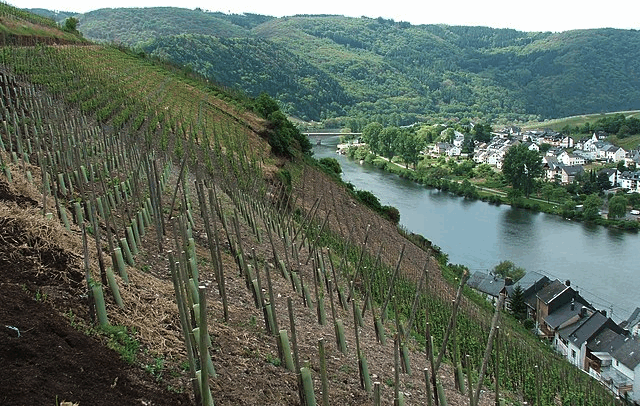
Mosel valley terroir

I should start by noting that in the science of ecology this variability is called local habitat, and it is a basic concept. All plants and animals, and also microbes, have a habitat. Sometimes, a particular species has a very broad habitat, covering thousands of miles, and sometimes it is incredibly restricted, covering less than a mile. Nevertheless, as an ecological scientist I have always accepted the concept of each species having a habitat as being self-evident.

The most widespread species on Earth is Homo sapiens; and humans seem to be determined to demonstrate that they can live anywhere, under any conditions — but we do have to wear different clothes and live in different types of houses, depending on where on the planet we are at any given moment. Most other species cannot afford this luxury, and so they have to live where the local habitat happens to suit them. For example, we often hear about the local weather, and its effect on grape growing — things such as this (The ocean phenomenon shaping great SA wines): “Occasionally we see the phrase ‘maritime influence’ come into play, where regions and vineyards close to our coastlines are affected by sea breezes, which can cool and moderate temperatures during the grape ripening seasons.”

However, while weather is a big overall determining factor for plant growth, it is not the only thing that affects plant habitat. I have always assumed that grape-vines have a habitat, even if the wine industry calls this idea “terroir”, instead. That habitat may be different for different grape-vine cultivars, and the habitat may affect those cultivars in different ways; but that just means that the wine industry is clearly and inextricably linked to nature. The basic question of interest to us, then, is: does the terroir affect the taste of the resulting wine, as well as affecting the growth of the grape-vines themselves?


A classic example of the discussion of terroir is that of Bordeaux (Terroir and climate of Bordeaux, Dirty little secret about the soil):
   The terroir of Bordeaux is more than just the soil. There are a variety of factors to consider that create the special terroir of Bordeaux. For example, the climate with its weather, exposure to sunlight, ambient temperatures in the air and in the soil, elevation, natural drainage, access to water, the ability of the soil to retain water in the dry vintages and allow for natural drainage in the wet seasons.
   Those are some of the most important elements that change how a grape will ripen, develop and taste, due to the soils and terroir of Bordeaux. All of those possibilities alter the performance of the vines and the grapes in every vintage.
On a more personal note, my wife and I, many months ago, tasted the: Celler de Capçanes collection called la Nit de les Garnatxes, which is 100% grenache from Tarragona (Spain). It consists of one bottle of wine made from each of four different terroirs: Argila (Clay), Calissa (Limestone), Llicorella (Slate / Schist), and Panal (Sand). Trust me, they are all quite different wines (we had the 2015 vintage). Even if you don’t trust me, then you can read brief notes of a tasting by Thomas Girgensohn (Grenache, four ways).

Mind you, we should not go too far. Alex Maltman, a geologist and winegrower, is the author of Vineyards, Rocks, and Soils: The Wine Lover’s Guide to Geology (2018). In his book he reminds us that: “Any mineral solutes present in wine ... exist at levels well below the threshold for detection” (p. 158). He thus urges an end to the persistence of words in tasting notes referring to rocks and other minerals in the literal sense. Similarly, we should not ignore the obvious human influence on both grape-growing and wine-making (Wine, terroir and the human touch).

Farm crops are constrained by the local geology

On a bigger scale, according to the Alcohol and Tobacco Tax and Trade Bureau (TTB), there are 147 American Viticultural Areas (AVAs) in California alone (Established American Viticultural Areas), about half of which are supported by regional winery and grower associations (Are AVAs important to the wine industry?). We might treat each of these as potentially having a distinctly different terroir, given that they are recognizably different from each other. For example: “It’s all about the location of the vineyard with microclimate, soil composition, depth, aspect to the sun, and elevation all playing a major role in the quality of the wines” (Napa cab still matters). Such things continue to be quite important in the wine world, as we also see in other U.S. states (eg. 7 New AVAs in nontraditional winegrowing states), as well as elsewhere (Chianti Classico’s new subzones: shining a light on diverse terroir).

There is plenty of online literature on the concept of terroir, and how to detect and apply it in the wine world, much of which is quite easy to read:


In a past life, I taught Australian university students about plant environmental biology, which is the relationship between plants and the immediately surrounding environment in which they grow. As I noted above, this is simply the scientific equivalent of teaching them about terroir. To me, it is therefore professionally impossible to be a terroir denier.


* Actually, the nearest recently planted half-hectare of vines is only 20 km away (and thus it is currently the most northerly vineyard in Sweden).

Monday, May 1, 2023

Assessing the carbon impacts of wine production

In a recent Wine Gourd post (The wine with the worst carbon footprint in history?), Paul Vandenberg (from Paradisos del Sol Winery) left a comment pointing out that glass bottles are actually responsible for a fair part of the carbon output of wine-making. Indeed, the Wine Institute in California has estimated that glass bottles account for at least 30% of wine’s carbon footprint.

This is clearly a very serious issue, and so I will go into it in more detail in this post. I will do this by focusing on the grape-growing and wine-making parts of the so-called Production Life Cycle (PLC), rather than either the retail or end-of-life PLC phases.


Conveniently, the Australian Wine Research Institute (AWRI) has recently published a Life Cycle Assessment (LCA) as applied to Australian wine production (Understanding the greenhouse gas emissions of Australian wine production). * This study calculated the greenhouse gas outputs associated with the production and distribution of Australian bottled and cask wine. This is an excellent source of information, which can also be applied to the wine industry globally.

As noted in the report:
Life Cycle Assessment (LCA) is a method for assessing the environmental impact and performance of a process or product in terms of its greenhouse gas emissions or carbon footprint. LCAs are generally either ‘cradle to grave’ — considering all impacts from extraction and processing of raw materials, energy production, use, recycling and disposal — or ‘cradle to gate’ — considering all impacts only until the product leaves the producer.
The LCA process actually requires complex mathematical modeling, in order to produce estimates for a typical (“average”) example of the product concerned. In this case, the initial data, as used for the modeling, were collected from 38% of Australia’s total vineyard area, plus wineries covering 43% of the total Australian production. Various features of the grape-growing and wine-making processes were then estimated from these comprehensive data.

The report concludes that the average ‘cradle to grave’ carbon footprint of Australian wine in 2022 was calculated to be 1.05 kg CO2 equivalent per L. However, most importantly, this varies dramatically depending on the type of packaging used. This is shown for four possible packaging types in this first graph. As you can see, bottles do not fare well, compared to bag-in-box distribution (called a “cask“ in Australia, which is the word used in the following graphs).

Fig. 5 from AWRI report

This becomes even more important if we add in the carbon expense of exporting the wine. The next figure shows that the carbon emissions of bottles delivered domestically is pretty much the same as the carbon emissions of exporting wine in bulk, because the packaging costs (glass) balance the transport costs (ships). Exporting wine in bottles is therefore the worst-case scenario. So, for the wine industry the big issue is, indeed, packaging, not either grape-growing or wine-making.

Fig. 1 from AWRI report

Next, the report compares the carbon emissions associated with Australian viticulture as compared to Australian wineries. The immediately preceding graph shows that grape-growing and wine-making have very similar carbon footprints to each other (ie. it is packaging and transport that has the biggest effect). Indeed, an earlier study from the AWRI concluded that grape-growing contributes 15% to the CO2 in a bottle of wine and wine-making contributes 17% (Understanding carbon emissions in the wine industry). This rough equality must be a social relief to both the grape-growers and the wine-makers.

However, the origins of their carbon emissions are very different between the two parts of the Life Cycle. As shown in the graphs below, both electricity and diesel fuel make up 70% of the carbon load for grape-growers, whereas electricity alone makes up 70% for wine-makers. Clearly, electric tractors, for example, might go a long way towards helping grape-growers (Electric tractors are rolling out in the field).

Fig. 3 from AWRI report

Fig. 4 from AWRI report

Anyway, I recommend that you take a look at the original report for yourselves, even if you don’t live in Australia. The situation is probably not very different compared to where you do live. Furthermore, the report estimates are interestingly compared for 2022 versus 2016 (with a nice improvement through time!). The second report that I mentioned above also has an interesting discussion of collecting the CO2 released during fermentation, and then re-using it for other purposes, which would be a positive contribution by the wine industry towards reducing atmospheric CO2.

There is a further discussion of issues in this article: The carbon economy and vineyards — what’s the status quo? After all, the future will involve reducing carbon emissions, so we might as well start now, as discussed here: Decarbonising wine: sector strategy to tackle emissions.


* Published in the Wine & Viticulture Journal Issue 2, 2023 pp. 34-37. The illustrations in this post are taken from that publication.

Monday, April 24, 2023

The real origins of grape-growing and wine-making?

It is now two decades since the first modern book appeared about the origins of wine-making, Patrick McGovern’s Ancient Wine: the Search for the Origins of Viniculture (2003), which itself came a dozen years after the first conference on The Origins and Ancient History of Wine (1991, the proceedings also being edited by McGovern). By “modern” I mean: applying to archaeological studies all of those fancy new techniques that scientists keep coming up with (often called molecular archaeology), and thus leveraging all of the new knowledge that we can now access.

This process has not slowed down since then, and, so, new publications keep appearing all the time, often challenging previous preconceptions. The histories of viticulture and viniculture work both ways — human history has led to the development of these two activities, and these activities have in turn affected human history to a great extent. The latter was, of course, especially true of classical Ancient Greece and Rome, about whose wine habits much has been written. However, previous work on the actual origins (rather than subsequent development) has focused on what Europeans call the Mid-East (although it is actually just west of the majority of the people on this planet — see: Valeriepieris: a circle housing majority of the world’s population).

This Euro-centric focus has been challenged in recent years, as I will discuss here. How did Vitis vinifera (the scientific name for the cultivated grapevine) originate from Vitis sylvestris (the wild grapevine)? After all, grapes may well have been the first plants that we domesticated!

V. vinifera (left) and V. sylvestris (right)

In the 2019 Afterword to a later edition of his book, McGovern emphasizes the ongoing rapid growth of molecular archaeology, along with other tools for the study of our ancient past. In particular, interest has focused on an understanding of how viniculture came to central and northern Europe (via southern Europe?) — we have a fairly good record of how it got from there to the so-called New World, much later. However, interest has also focused on ancient Chinese fermented beverages, which included grape wine. The history of the peoples of Central Asia is much more poorly known, to Europeans and their descendants, than that of the Near- and Mid-East.

So, our reconstructed historical scenarios can be expected to need updating. I mean, let’s face the reality of scientific procedures. Scientists start with the simplest hypothesis, and then abandon this only when forced to do so by mounting evidence (The best reason to trust science). Obviously, the simplest idea, in this case, has been that there is a single place and time for the origin of grape domestication and wine-making — sometimes called the Noah Hypothesis, as the Bible reports him to have re-planted vines only once near Mount Ararat (now in north-eastern Turkey) after the Flood.

However, it should surprise no-one that this idea is too simplistic. Grape-vines are just too widespread across Asia for people not to have stumbled across the process of grape domestication, for example, probably many many times in many many places. The only question, then, is: how many of those peoples started to carry out the process of fermentation, for instance, deliberately, rather than letting it continue to happen fortuitously? This development is, of course, in addition to those people who merely used grapes as a food source, rather than as a source of fermented beverages.

Map of the proposed scenario

The latest (2023) publication covering this topic, in detail, has 89 authors: Dual domestications and origin of traits in grapevine evolution. This follows an earlier (2019) paper by the same research group (but with only 34 authors): Whole-genome resequencing of 472 Vitis accessions for grapevine diversity and demographic history analyses.

The reason for the large number of persons involved is the amount of genome sequencing required: 3,535 “cultivated and wild grapevine accessions worldwide.” Their final conclusion, from looking at 2,237 Vitis vinifera and 949 Vitis sylvestris samples, goes like this:
In the Pleistocene, harsh climate drove the separation of wild grape ecotypes caused by continuous habitat fragmentation. Then, domestication occurred concurrently about 11,000 years ago in Western Asia and the Caucasus to yield table and wine grapevines [respectively]. The Western Asia domesticates dispersed into Europe with early farmers, introgressed with ancient wild western ecotypes, and subsequently diversified along human migration trails into muscat and unique western wine grape ancestries by the late Neolithic.
So, their idea is that our modern wine-grapes came from the Mid-East while our eating grapes came from Western Asia (the Caucasus), as depicted in the map above. Their time-line of the origin and subsequent dispersal of wild and domesticated grapevines is shown in the figure below. *

There is nothing original about this idea, as McGovern describes roughly this possibility in his 2019 Afterword. After all, it is quite likely that the initial cultivation of grapevines was for nutrients (and calories), while the development of wine-making cultivars was accidental. What we do have in this new paper, however, is a detailed quantitative confirmation of the idea; and this is what we need. The question that remains, now, is: Is this idea still too simplistic? After all, I noted above that this is the way science works: keep it as simple as possible until forced by circumstances to accept that reality is actually more complicated.

Timeline of the proposed scenario

Most of you have no direct experience of science, because your personal and professional lives are quite separate from this activity. In that case, you may well have an image of scientists as being a bunch of weirdos in white coats playing in laboratories, where they collect data, which is then fed into black-box computer analyses, and interpreted based on wild daydreams. This is often quite an accurate image, I am sorry to say, as I can attest from decades spent surrounded by professional scientists.

Many other times, of course, science is done by quite ordinary sorts of people, who proceed carefully and quietly, often “out in the field” rather than in a laboratory (ie. in a forest or an agricultural plot). The work of these latter people always seems to be more realistic, and their conclusions more convincing, at least to me.

The point here is that this new paper discussed above seems to come from the first group, not the second. Therefore, things may well change, perhaps even in the near future. We may yet find evidence for multiple independent grapevine domestications!


*  Note that we are talking mainly about red grapes here. It seems that the first evidence of cultivation of a modern white-grape variety is from what is called Late Antiquity, in this case the 8th century CE (Ancient DNA from a lost Negev Highlands desert grape reveals a Late Antiquity wine lineage).


Personal note: In honor of this post, my wife and I drank a bottle of Askaneli Brothers’ Rkatsiteli Qvevri 2020, from eastern Georgia (the Caucasus, where wine-grapes originated). This (yellowish) white wine was aged in large half-buried earthenware vessels (qvevri), just as it has been for the past five thousand years. Very different, and very interesting (and also nice wine!). This aging practice is apparently being tried elsewhere (Ancient European winemaking tradition using qvevri revived in Tasmania).

Monday, August 8, 2022

How has the vineyard composition of France changed recently?

A few weeks ago, I wrote about long-term changes in the vineyards of the USA (How has the vineyard area of the US states changed over the past century?), comparing the vineyard area in the distant past with what it is now. Also, I had previously done a similar thing for the vineyards of France (France's changing vineyards) and Australia (Australia's changing vineyards), although covering only the most recent six decades.

Today, I will look at France again, but this time I will focus on the change in individual grape varieties. After all, More vineyard area does not necessarily mean more grape varieties. I have previously looked at individual varieties for Sicily (Sicily is deservedly in the wine spotlight these days), for example, but not for France Very remiss of me!


The comparison concerns the areas of the various red-grape varieties (only) grown in France in 1961 and and 2016 (55 years apart). The 1961 data come from Pierre Galet (1962 Cépages et Vignobles de France, as provide by the American Association of Wine Economists Facebook page. The 2016 data come from Kym Anderson and Signe Nelgen Database of Regional, National and Global Winegrape Bearing Areas by Variety, housed at the Wine Economic Research Centre. *

The main trick was to try to align the various varietal names between the two datasets (ie. identify the synonyms). There appear to be 60 distinct red-grape names involved (plus miscellaneous “Others”). Of these, 30 names were identical in the two sets, and 13 more were listed as synonyms. Another 15 could be deduced via online resources (eg. Lexicon, Wine-Searcher). The two remaining from the 1961 data are: “Morrastel-Bouschet”, which is apparently a cross of Graciano (Morrastel) and Bouschet Petit; and “Aspirans”, which is plural, apparently referring to several similar cultivars, all now uncommon in France. Another plural is “Gamays tenturiers”, which consists of: (at least) Gamay Teinturier de Bouze, Gamay Teinturier de Chaudenay and Gamay Teinturier Freaux. (Teinturier grapes have red flesh as well as skins.)

The 1961 data are clearly only rough estimates, in that they are presented to the nearest 50 or 100 hectares (250 acres), whereas the modern data are based on European Union records, to the nearest 0.1 hectare. The two datasets are shown in the graph. Each point represents one grape variety, located according to its vineyard area in 1961 (horizontally) and its area in 2016 (vertically). Only six of the varieties are labeled. The pink line represents equal areas in both datasets (anything above the line had more area in 2016 while anything below the line had more area in 1961).

Changes in French red-grape varieties

Since most of the points are below the line, more red-grape varieties decreased in area (41 of them) than increased (19) over the 55 years. This is in spite of an apparent 26% increase in total red-grape vineyard area during that same time. This implies a loss of what is referred to as Diversity, in the sense that fewer varieties are coming to dominate the national vineyards. This is generally a Bad Thing (Regional diversity of grape varieties is important for climate change); and France has not done all that well in this regard, compared to many other countries.

The biggest absolute increases in area involved Merlot (+93,500 ha), Syrah (+60,500 ha), Garnacha Tinta (+46,500 ha) and Cabernet Sauvignon (+39,500 ha), followed by Pinot Noir (+23,500 ha) and Cabernet Franc (+18,500 ha). None of these increases is particularly surprising, given the popularity of their resulting wines — success will out. Indeed, on a global scale these are also the biggest red-grape increasers recently, except for Garnacha Tinta, which is among the big global decreasers recently (The grape varieties that have increased and declined the most since 2000). The three points at the very left of the graph represent varieties that were very rare in 1961 but now have 2—3,000 ha (Caladoc, Muscat of Hamburg, Marselan), suggesting a new interest in them.

The biggest absolute decreases in area involved Aramon Noir (-159,000 ha) and Mazuelo (-153,000 ha), followed by Grand Noir (-40,000 ha) and Alicante Henri Bouschet (-32,500 ha). These are pretty dramatic decreases, indicating a pretty serious fall from favor. Mazuelo is also among the big global decreasers (The grape varieties that have increased and declined the most since 2000), while the others are not widely planted outside France. Actually, some of the 1961 varieties are now considered as close to being extinct (Abondonce de Doui, Canari, Gueuche Noir), with one now extremely rare (Gros-Verdot), and others now globally uncommon (Fuella, Teinturier du Cher, as well as the Aspirans mentioned above).

Of the common varieties, Tannat has maintained its area (it is on the pink line in the graph), as has Cinsaut (near the line). These are the exceptions rather than the rule. Another common global pattern is increases in varieties in one country only. The best-known example is Tempranillo, which has had far and away the biggest global increase in area since 2000, but almost exclusively (94%) within Spain (The grape varieties that have increased and declined the most since 2000). Tempranillo was not recorded in France in 1961, but had expanded to 659 ha by 2016.


These days, many grape varieties are international (Wine grape varieties: where in the world are they?), and we thus expect a great deal of similarity in the vineyard composition of both the Old and New Worlds (Which countries are similar to each other, in terms of their grape varieties?). Not unexpectedly, France is rather similar to Spain and Italy in this regard.

Nevertheless, the vineyard grape varieties of France have long been of interest to the wine industry, especially the red ones. Indeed, there was a time when their resulting wines were the gold standard to which others aspired. While this is no longer strictly true (just ask a Californian wine-maker!), the grapes are still of interest. Clearly, the French have not rested on their laurels, but are continuing to make deliberate efforts to move with the times, by changing their vineyard composition.


* Anderson and Nelgen also have data for 14 varieties in France in 1960.

Monday, April 11, 2022

The French grape-growers will need to get used to April Weather

We have all read this past week about the frosty weather, particularly in France, but also elsewhere in Europe. This frost followed a period of very warm (summerish) weather, during which the grape vines started to grow. The frost has therefore threatened the new buds and shoots:
The French fruit-growers are not (yet) used to this. Part of the issue here is that the same thing happened last year, as well, causing an estimated €2 billion in damage to the French wine industry. *


Well, let me tell you, here in Sweden this happens every year. Year after year after year. It is situation normal for us. We call it Aprilväder (April Weather) — for example, our weather forecasters cannot yet make a consistent prognosis for Easter (the end of this week). Wikipedia describes the situation like this:
April weather is a changeable weather, where it can be sunshine and summer temperatures one day, and snow, rain, hail and cold the next. This type of uncertain weather is common in the spring, in the northern hemisphere, especially in April, the month when temperatures rise fastest. The sun warms the ground, the heated air rises and forms cumulus clouds. Higher up, however, it is still cold, and the upper part of the cumulus clouds become icy and thus cumulonimbus, which give off rain, snow or hail/snow (which is softer than ordinary hail, but harder than snowflakes).
The current issue for Sweden is that April Weather now turns up in March, as well. This year, in my town, "official" spring was 2 weeks earlier than average (6th March 2022), and at the end of the month (29th) the winter weather returned. We have been dealing with it since then, with the last expected snowfall yesterday and the last freezing temperature later this week (ie. a fortnight of winter, after 3 weeks of spring). **

Mind you, the Wikipedia author does not suggest much in the way of biological consequences for Swedes:
April weather can lead to problems as people have a hard time knowing how to dress best — some people are wearing shorts and a t-shirt while others are still wearing thick winter clothes. In addition, it can cause traffic difficulties if there is snowfall and ice after motorists change to summer tires.
Well, let me tell you that I have the same problems in my garden as the grape-growers do in their vineyards. New buds and shoots on the early plants may be killed, and the growth / flowering / fruiting of these plants can be affected for the rest of the year. My roses and hedge, which are among the earliest parts of my garden to start growing each year, eventually recover; but that is only because I do not expect fruit from them. Fortunately, my two grapevines are protected, because I grow them on my house and garage, where frost cannot get at them.


It is now occurring to the French that this situation might no longer be unusual for them, either:
My own conclusion is also that the conditions down south are no longer unusual, or “freak”, weather. They are the new normal, under climate change. It is not freakish here in Sweden, so the French had better get used to it happening every year, as erratic weather moves further south each spring. This is a tough thing to have to say to agriculturalists; but global climate change is real (How can you doubt global warming?). Moreover, it is the wine industry that has provided some of the best evidence for global warming (Grape harvest dates and the evidence for global warming) as well as the consequent increase in weather variability (Grape harvest dates and year-to-year climate variability).

If these recent spring frosts are, as we expect, a result of global climate change, then we have every reason to ask: Why have we left it so late to deal with climate change in the wine industry? The fires in California (Threats to biodiversity when controlling wildfires), the drought in the western USA (Another drought year in California), and the frosts in Europe ... The list will keep getting longer.

For those of you who have not noticed, the United Nations has just released the Sixth Assessment Report of the Intergovernmental Panel on Climate Change. It notes that governments worldwide have not been meeting their pledges on limits to global warming. That means that none of the anticipated consequences are yet being avoided (Climate report offers some hope, but the need for action is urgent). In short: Get used to it, from now on, because we (globally) are not doing anything like enough to stop it.


The Americans have a thing called (politically incorrectly) Indian Summer. This is a period of warm, dry weather in late autumn (in temperate regions of the northern hemisphere), after the first frost, or more specifically the first “killing” frost. This is thus the inverse of April Weather. From now on, vineyard growing seasons are going to be book-ended by these two weather patterns, at least for the foreseeable future.

There are several possible reactions here, of course. For example, vine pruning can be adjusted to try to delay bud-break, or frost-protection netting could be used (Should frost nets be used more widely in vineyards?) — the latter works quite well in Sweden. As has been suggested on other grounds (Resistant varieties: the next step toward sustainability), some serious thinking might also be done about which varieties or clones are grown where — late-budding clones are going to be in particular demand, I guess. Otherwise, candle sales are going to boom (as shown in the top photo).


Update:

Interestingly, the day after I posted this, the chairman of the French Independent Winegrowers’ Association (Jean-Marie Fabre), announced the same thing (Adverse weather the new normal, claims chair of French wine trade body):
The series of frost episodes shows that these are not isolated, one-off weather incidents over a decade. I am convinced that weather hazards will become increasingly frequent. Freak years will no longer be those where there is adverse weather, but rather those without adverse weather.


* The current news even made it into my local newspaper:
In the champagne region, the winegrowers woke up to minus nine degrees and in Burgundy the thermometer showed -5. And with the drop in temperature came fears of a harvest like last year's, when similar weather cost the country's winegrowers the equivalent of 20 billion kronor.
** Yes, this has created havoc with changing to summer tires — studded (winter) tires are officially supposed to be changed by April 15, but since most people in my town have (quite rightly) not changed to summer tires yet, there are soon going to be very long last-minute queues at the changing stations.

Monday, October 11, 2021

Does more vineyard area mean more grape varieties?

Answer: yes — and no. The wine industry always has complexities.

Back in Ancient Rome, Pliny the Elder wrote (in his Naturalis Historia):
Democritus, who has declared that he was acquainted with every variety of the grape known in Greece, is the only person who has been of opinion that every kind could be enumerated; but, on the other hand, the rest of the authors have stated that they are quite innumerable and of infinite extent, an assertion the truth of which will be more evident, if we only consider the vast number of wines. I shall not attempt, then, to speak of every kind of vine, but only of those that are the most remarkable, seeing that the varieties are very nearly as numberless as the districts in which they grow.*

Ancient Greece was the origin of grapes cultivated to make wine, as far as the Romans were concerned. So, Pliny was suggesting, in part, that the number of grape varieties is associated with the lengthy time over which they have been cultivated.

However, he is suggesting something else, as well. It is also possible that the number of grape varieties is associated with the amount of land that is used for that cultivation. That is, the more area available, and thus the more micro-climates, then the more likely it is that different varieties will be grown (and thus different wines made). Pliny is thus considered to be the originator of the idea of terroir in wine-making.

I thought that I might look at these two things, together. As a source of data, I have used the Organisation Internationale de la vigne et du vin, which lists countries with vineyards larger than 50,000 hectares in 2020 (with 2016 as the latest available data for smaller areas). Since my question is about wine-making not grape-eating, I have excluded (in decreasing order of grape-growing area): China, Turkey, Iran, India, Uzbekistan, Afghanistan, Egypt, Algeria, Morocco, Tunisia, and Turkmenistan. I have used all other countries, except that the data for the number of varieties are missing from South Africa.

Relationship of vineyard area and number of grape varieties


The remaining data are plotted in the first graph. Each dot represents one wine-making country, located with the number of reported grape varieties shown vertically. The horizontal axis represents the recorded vineyard area (in hectares) — note that the scale is logarithmic.

This might look like a bit of a mess; but, in fact, it illustrates both of the points made above: the number of varieties can be influenced either by cultivated land area or by length of cultivation.

To see this more clearly, I have annotated the graph for you, in the next figure. I have added labels for some of the countries, and a summary line illustrating the relationship between number and area.

Let's take the line first. This illustrates a strong logarithmic relationship for 15 of the countries (ie. excluding Georgia, New Zealand, Armenia, Moldova, Chile, Spain). It indicates that whenever we double the vineyard area then we get c.80 more grape varieties (technically, this accounts for 70% of the between-country variation in the number of varieties).** So, we may safely conclude that, yes, the number of wine-grape varieties often increases with the amount of land that is used for their cultivation.


Annotated relationship of vineyard area and number of grape varieties

Note that Italy and France are at the top of the line, with the greatest number of recorded grape varieties (454 and 383, respectively). It has often been claimed that Pliny also commented to the effect that Italy has more kinds of wine grapes than there are grains of sand on a beach. Alternatively, it has also been noted that the Roman poet Virgil said: “It would be easier to measure the grains of sand in Greece, despite the different varieties of grapes.”

Greece is no longer in the picture as the cradle of wine-making. This role is now acknowledged to have occurred at least 8,000 years ago, in the area now occupied by Georgia and Armenia, which are much further east. You can see the result of this in the graph, as they both have a large number of grape varieties even though these days they do not have a lot of grapevine area. (Aside: in Georgia the vineyards’ share of the total agricultural crop area is greater than in any other country.) Most of these varieties have been there for thousands of years, but are not ones in common use elsewhere. In Georgia, for example, the two most common grapes are the whites Rkatsiteli and Tsolikouri, followed by the red Saperavi — when was the last time you saw these on the label of a bottle of your wine (U.S. wine imports from Georgia and Armenia)?

That accounts for two of the exceptions to the area / number relationship — ancient history is important. New Zealand’s placement in the graph is probably explained by recent history, instead — experimentation in response to climate change, trying new varieties to see which ones work in the new climate regime. This is also being done in Australia, and also the USA. However, the graph indicates that it is not (yet) being done in Chile, the only other New World country that does not fit the area / number relationship. In the Old World, the current trend seems to be more towards re-purposing the current varieties, rather than trying new ones.

This leaves Spain as the remaining odd-one-out. Spain is well known for producing oodles of bulk wine from a few high-yielding varieties, much of which ends up in France, to help bolster what is labeled “EU wine”. This may be slowly changing, especially in areas such as Rioja. Nearby, Portugal is a very different place. In the graph, it is the unlabeled point furthest above the line. It has only 20% of the vineyard area of Spain, and yet it has 2.2 times as many grape varieties — this is much more “normal”, according to the graph.


* This same book is usually credited as the source of “...volgoque veritas iam attributa vino est.” [It has become quite a common proverb that in wine there is truth.]

** Remember: this relationship applies among the points, not outside them. It would, for example, be naive to think that doubling from 10 Ha to 20 Ha would add 80 varieties!

Monday, January 25, 2021

What are the Australian and Spanish grape-growers doing?

Commenting on the effects of climate change in the wine industry, Jancis Robinson (What price terroir in an era of climate change?) recently commented:
Here then is the dilemma which will face Bordeaux châteaux in the next 20 to 50 years. Might they move to a cooler region and plant their present famous varieties, Cabernets Sauvignon and Franc and Merlot, or, perhaps stay put in Bordeaux and grow more heat-tolerant varieties such as Syrah and Grenache?
The latter option is being actively pursued in several parts of the world, notably Australia, where the climate is now notably drier and hotter than it was when I grew up there, last century.* Robinson continues:
For presently cooler regions, such as Burgundy, or Central Otago in New Zealand, it is still possible to choose more adapted varieties as warming occurs ... However, for regions already enjoying quality reputations with more heat-tolerant varieties, such as Australia’s Barossa Valley with Shiraz, the situation is much more difficult as there are few well-known varieties adapted to hotter climates.
https://www.etsy.com/listing/495670262/erte-1982-heat-spell-lady-on-grape-vine

There are clearly two topics here: what the Australians (and others) are already doing, and what the Europeans might start doing. In this regard, the Australians are trying Spanish, Portugese and Italian grape varieties, whether well-known or not, but the Spanish seem to be trying French varieties!

The evolution of Australian wine

Australians originally planted grape vines familiar to those growing them, from the Old World. However, through time, the vineyards ended up being dominated by the "usual suspects" — the well-known international varieties. However, it has now been noted that the wine grapes are ripening up to two days earlier each year (Australian wine under threat from climate change, as grapes ripen early).

So, there is now increased interest in what have become known as "alternative grape varieties". In one sense, these consist of whatever varieties seem worth trying in a changing climate, or even in response to interest from wine drinkers. However, in general, the varieties being trialed are the tried and true ones from dry climates in the Old World. These are, then, mostly those from close to the Mediterranean. This actually has a long history, with Coriole first importing and championing Italian varieties (such as Sangiovese and Fiano) back in 1985.

This topic has been the basis of a recent research articles (eg. Alternative varieties for the Australian wine industry to help winegrape producers in a changing environment and market. 2020. Wine & Viticulture Journal 35(3): 52-57). There are also online discussions, such as Alternative Australian varieties and Australian alternative varieties: the ones to watch, three years on. There is even an entire website devoted to the topic (Vinodiversity). Some of the varieties being actively pursued include: Assyrtiko, Fiano, Nebbiolo, Nero d’Avola, Grüner Veltliner, Tempranillo, Touriga Nacional, and Vermentino.

This is not to say that all of Australia is like this — it is a big continent, after all. In particular, Tasmania's cooler climate is still suited to those traditional grape varieties currently in strong demand — Pinot noir: 44% of the area; Chardonnay: 27%; Sauvignon blanc: 11%; Pinot gris: 8%; Riesling: 6% (Introduction to Tasmania’s wine and regions).

Finally, note that there are actually two potential driving forces behind the move to alternative varieties: a drying climate, and customer demand. If these both lead in the same direction, then all will be well in both the vineyard and the winery (Varietal diversity to drive demand). Otherwise, we might possibly see some future confusion within the Australian wine industry. This potentially occurs because of the New World propensity for naming wines after their component grapes, so that these grape varieties need to be known by the customer (recently discussed by Tom Maresca). In the Old World,  there are protected wine names, which are composed of sometimes quite un-namable varieties — for example, can you name the varieties that go into Rioja Blanco, from northern Spain?

Changing Spanish vineyards

In contrast to this, the Spanish grape-growers seem to have a very different idea. Recently, the American Association of Wine Economists (AAWE) put a couple of tables on their Facebook page:
   Red wine grape varieties in Spain: Vineyard area and age structure
   White wine grape varieties in Spain: Vineyard area and age structure
These data (originally from Estadísticas agrarias) show that relatively recent grape-vine plantings have included considerable areas of French varieties. Here are those with at least 1,000 hectares of vines:

Cabernet sauvignon
Syrah
Merlot
Chardonnay
Sauvignon blanc
Petit verdot
Pinot noir
20,535
20,155
13,044
7,674
5,087
1,866
1,063

It is difficult to believe that this has anything to do with improving the Spanish vineyards in response to ongoing changes in growing conditions. Indeed, it looks far more like an attempt to cash in one the retail popularity of certain French wines. If so, then given the quote that I started this post with, it looks doomed to failure, unless these are high-altitude or otherwise cooler vineyards.

Indeed, it may have much more to do with the amount of bulk wine that travels from Spain to France, to beef up the northern wines — we need to get the varieties right, after all. Things ripen much better in Spain. For example (The differences between high- and low-elevation wine):
Médoc, also known as the Left Bank of Bordeaux, is one of the lowest-lying wine regions in the world. This enabled grapes like Cabernet Sauvignon and Merlot to ripen in a marginal climate for these varieties before climate change. Higher altitudes would have been too cool, and even low-lying vineyards often struggled to ripen grapes fully.


* Those wildfires that you are increasingly hearing about are simply one obvious by-product (as well as deliberately lit ones). Trust me, I know. In my previous life as an environmental biologist (30 years ago) I used to study the effects of bushfires on Australian plants, and how those plants cope with what is obviously an extreme situation. Well, that situation is now much more extreme than it was back then. The same is true of California, which I first visited in 1990.

Monday, October 5, 2020

Wine grape varieties: where in the world are they?

We have all become aware of the changes that have been occurring within viticulture over the past few years. Grape-growing has a long tradition in many regions, often relatively unchanged over extended periods of time. However, this is now changing rapidly, in response to an obviously altered climate this century. This topic should provide the impetus for a few blog posts.

However, to get started, we might consider where various wine-grape varieties are grown now, before we consider any of the changes — I also had a bit of a look at this topic back in March (Which countries are similar to each other, in terms of their grape varieties?). The information for this new post comes from Table 100 of:
Anderson, K. and S. Nelgen (2020) Which Winegrape Varieties are Grown Where? A Global Empirical Picture (revised edition). University of Adelaide Press: Adelaide.


What we have here is a compilation of the estimated growing areas in the year 2016 for 300 wine-grape varieties in 50 countries. Note that China is reportedly the world's biggest grape producer, but only 11% of these grapes are used to make wine (the rest are table grapes, including raisins). Here, the focus is on wine grapes only.

This is obviously rather complicated information (300 varieties x 50 countries), and so we need some summary images, in order to grasp the overall picture.

We could start, for example, by comparing the so-called New World with the Old one. Modern viticulture proliferated in south and central Europe (the Old World) and spread from there with various colonial invasions of the other continents (the New World, although obviously the native peoples did not see it that way), principally North and South America, and Australasia, but also bits of Africa and Asia.

The following graph provides a summary of the growing area summed over the various countries of the Old World (horizontally) and the New World (vertically) for each grape variety (represented by the points). The top 12 most abundant varieties globally are highlighted in pink, and are named, except for Sangiovese (where I couldn't fit the label in), and with Côt (aka Malbec) added.

Areas of grape varieties in the New and Old Worlds

The dashed line indicates equal vineyard areas in the New and Old Worlds. Note that the New World areas of Cabernet Sauvignon and Côt (Malbec) greatly exceed those of the Old World, while for Chardonnay and Sauvignon Blanc they are about equal. For the other major varieties, the Old World areas exceed those of the New.

Cabernet Sauvignon is widespread throughout the both the New and Old Worlds, while Côt (Malbec) is mostly grown in Argentina. Syrah (aka Shiraz) is becoming more widespread in the New World, being a good candidate for many areas where the climate is becoming drier — it might soon reach equality between Old and New. Chardonnay and Sauvignon Blanc are also widespread, although the latter is particularly popular in New Zealand.

Merlot has never been as popular in the New World as it is in the Old — Cabernet was chosen to emulate the Bordeaux wines, but not Merlot. The other popular grapes from the Old World have not yet caught on elsewhere — Tempranillo and Airén from Spain, Garnacha Tinta (aka Grenache) from Spain and France, Trebbiano Toscano from France and Italy, and Sangiovese from Italy. Pinot Noir and Riesling have always been a bit specialist, even in the Old World, as they require careful handling in suitable sites, in order to produce good wines.

We can now proceed to an overall picture of the varietal makeup of the the different countries, using a more complex illustration. I have previously explained the use of networks, to display complex relationships (Summarizing multi-dimensional wine data as graphs, Part 2: networks). We cannot just lump countries together into simple groups, because they each have their own particular make-up.

To produce the network, I first calculated the percent of each grape variety as a component of the viticultural area in each country, and then calculated the similarity among pairs of countries using the Bray-Curtis measure. The latter is important because it ignores varieties that do not occur in either of the two countries being compared (otherwise, two countries would be similar because of all of the varieties neither one has). Finally, I used the similarities to calculate a NeighborNet network, as shown next (click to enlarge).

Network of countries based on grape composition


Countries that are closely connected in the network (along the edges) are more similar to each other, in terms of their grape varietal composition, than they are to countries further away.

Note, first, that all of the countries have a lot of uniqueness — the terminal edges leading to each country are much longer than are the complex of connecting edges in the middle of the network. For example, Portugal has obvious similarities to Spain, as they share 43 of the 300 listed varieties; but Spain has 42 other varieties that Portugal does not have, while Portugal has 25 that Spain does not — the differences between the two countries exceed the similarities. Moreover, countries like Greece, Cyprus and Ethiopia are very distinct. Indeed, they are each dominated by a single variety that is found in few other places.

Second, none of the countries form clear groups that are separate from other groups, except for Morocco + Tunisia, which are almost identical, sharing all 15 of their grape varieties. There are, however, quite a few neighborhoods, where countries form close connections, but these neighborhoods connect in complex ways to the other neighborhoods.

Some of these neighborhoods are geographical, but others are not. Notably, if we look at the countries of South America, we can see that they are very different in terms of grape varietal composition — clockwise from the top: Brazil, Peru, Uruguay, Chile, Argentina; even Mexico is different. New World vineyards are certainly not all the same!

Perhaps the most obvious country collection is Austria + Slovakia + Czechia, all of them having a lot of Grüner Veltliner and Graševina, along with some Sankt Laurent (which variety occurs almost nowhere else). These countries are also somewhat similar to Germany + Luxembourg, all five of them having a lot of Riesling and Müller-Thurgau.

Georgia + Kazakhstan form an obvious pair, both being dominated by the Rkatsiteli grape. Likewise, Ukraine + Russia are similar (dominated by Cabernet Sauvignon, Aligoté, and Rkatsiteli), along with Moldova (which also has a lot of Merlot, plus the Moldova grape), and also with some similarity to Romania (which has large areas of Fetească Albă and Fetească Regală instead of Rkatsiteli). Japan has obvious similarities to South Korea (based on Kyoho, and Muscat Bailey A). However, in all of these cases the differences are still bigger than the similarities.

It will come as no surprise to you that the vineyards of United States and Australia are similar, being dominated by, in particular, Cabernet Sauvignon and Chardonnay; however, they actually share 58 varieties, although they do occur in very difference abundances (Australia has another 34 non-shared varieties, and the US has 15).

On the other hand, it may surprise you that the countries with the most similar grape make-up to New Zealand are Myanmar and India. New Zealand differs from almost all other countries by being so heavily dominated by Sauvignon Blanc, comprising 58% of its vineyard area. Well, Myanmar has only 70 ha of vines, but 31% of these are Sauvignon Blanc; and India has c. 2,700 ha, with Sauvignon Blanc at 19%. Now you know!

Conclusion

The global vineyard is changing, as it always has done. New varieties have arisen in particular places, and become established as a valued part of the environment. This has progressively made old-established vineyards different from each other. As people have moved, they have taken their favorite vines with them. Some of these varieties have become popular in their new homes, but each home has been somewhat different. This also makes economic sense, of course, since there is little reason for competing head-to-head in a global marketplace, Future changes will be driven by these same impetuses.