Showing posts with label Wine tasting. Show all posts

Monday, August 12, 2024

The effect of background music on the taste of wine

Some people seem to like pairing a bit of music with their wine consumption, but it actually goes much further than this. There is experimental evidence that music has an effect on how we taste wine, so that different music produces different taste sensations in our brains. This seems to me to be an important and interesting topic, and yet it seems not to have been covered much in the wine literature. So, let’s have a look at it here. *


One of the earliest publications on this topic dates back only a dozen years:
Adrian C. North. (2012) The effect of background music on the taste of wine. British Journal of Psychology 103: 293–301. The author, then at the Heriot Watt University, Edinburgh, but now at Curtin University, Perth, Australia, summarized his work like this:

Research concerning cross-modal influences on perception has neglected auditory [sound] influences on perceptions of non-auditory objects, although a small number of studies indicate that auditory stimuli can influence perceptions of the freshness of foodstuffs. Consistent with this, the results reported here indicate that independent groups’ ratings of the taste of the wine reflected the emotional connotations of the background music played while they drank it. These results indicate that the symbolic function of auditory stimuli (in this case music) may influence perception in other modalities (in this case gustation); and are discussed in terms of possible future research that might investigate those aspects of music that induce such effects in a particular manner, and how such effects might be influenced by participants’ pre-existing knowledge and expertise with regard to the target object in question.
This is fascinating, I think — sound influences taste. Since then, there have been a number of similar articles, and some follow-up ones, as listed by Pubmed.


One of these subsequent articles, with a theoretical discussion of the topic, is:
Charles Spence & Qian Janice Wang (2015) Wine and music (III): so what if music influences the taste of the wine? Flavour 4: 36. The authors summarized their ideas like this:
A growing body of evidence, both anecdotal and scientifically rigorous, now points to the fact that what people taste when evaluating a wine, not to mention how much they enjoy the experience, can be influenced by the specifics of any music that happens to be playing at the same time. The question that we wish to address here is ‘So what?’ Why should anyone care that music (or, for that matter, specially composed soundscapes) exert(s) a cross-modal influence over the wine-tasting experience? ‘Why not just drink great wine and forget about the music?’ a sceptic might ask. Here, we outline a number of the uses that such research findings have been put to in the marketplace, in experiential events, in artistic performances, and in terms of furthering our theoretical understanding of those factors that influence the tasting experience. We also highlight how the latest in technology (think: sensory apps and hyper-directional loudspeakers, not to mention digitally augmented glassware) augurs well for those wanting to deliver the most stimulating, the most memorable, and certainly the most multi-sensory of tasting experiences in the years to come. Demonstrations of sound’s influence on wine perception will most likely be applicable to a variety of other drinks and foods too. Ultimately, the argument is put forward that there are many reasons, both theoretical and applied, as to why we should all care about the fact that what we listen to can change the sensory-discriminative, the descriptive, and the hedonic attributes of what we taste.

Morrison Brothers Big Bad Band, at Rothbury Estate Winery.

This is more of a reasoned argument, rather than an experiment, of course, although the authors’ conclusions and suggestions are important. A more recent article with an actual experiment is:
Q.J. Wang, M. Frank B. Houge, C. Spence & K.A. LaTour (2019) The influence of music on the perception of oaked wines — a tasting room case study in the U.S. Finger Lakes Region. Journal of Wine Research 30: 312–321. These authors summarized their work like this:
Innovative wine makers and marketers increasingly see the consumers’ multi-sensory experience in the tasting room as a means of differentiating themselves from the competition. With recent research demonstrating the influence of music on the wine-tasting experience, the present study introduced music as a unique aspect of a VIP tasting room experience at a family-owned Finger Lakes winery. A convenience sample of 46 participants tasted four oaked still wines (2 white, 2 red) both in silence and with a complementary soundtrack, and rated the fruitiness, spiciness, and smoothness of each wine in both sound conditions. Undisclosed to the participants, the soundtrack had been designed to bring to mind woody/spiced elements of oak ageing. It was hypothesised that listening to the oak soundtrack would alter the evaluation of the wines to be smoother and spicier. The results revealed that those wines tasted while the soundtrack were playing in the background were rated as significantly fruitier and smoother than the same wines when tasted in silence. These results are discussed in terms of the literature on cross-modal correspondences and the emotional mediation account. Moreover, the positive feedback from the attendees showcases music as a viable component of a multi-sensory experience when visiting a winery.
Given these results (the authors got the changes they predicted), I am sure that we will hear more about this topic. Wine tasting is not just about the taste and smell sensations — it involves all of our minds, and the sensory inputs during the tasting experience. Professional tasters need to be aware of this; and we amateurs need to take it into account as well.

Taste wine in the right atmosphere, and it will taste at its best.


* I let the authors speak in their own words, so please excuse their academic background!

Monday, May 13, 2024

Bordeaux reds were clearly preferred to California cabernets at the turn of this century

In last week’s post, I used some data from a wine-tasting conducted by Bob Henry (What happens when you score wines at comparative tastings?). I looked at the odd effect in wine tastings, where the preferences for wines within a single flight of similar wines does not necessarily match the preferences produced when two flights are combined into a single group. Wine tasters are people, after all, and we reserve the right to do things our own way!

Bordeaux vs Napa

This week, I will take a retrospective look at three more of Bob’s tastings, from the end of the 1990s, in which his tasters compared red Bordeaux wines and California cabernets at the same session. Each tasting covered a different vintage, but only a few of the wineries were repeated across the vintages.

There were 15 participants at the Winter 1998 tasting of the 1985 vintage (wines 13 years old), with 8 Bordeaux wines and 8 California wines. There were 15 participants at the Summer 1997 tasting of the 1986 vintage (wines 11 years old), with 6 Bordeaux wines and 7 California wines. There were 16 participants at the Autumn 1997 tasting of the 1990 vintage (wines 7 years old), with 7 Bordeaux wines and 7 California wines.

The wines were tasted blind (ie. the bottle in a paper bag, although the order of wines was not random). Each person was asked to rank-order their three preferred wines from the total wines tasted for each vintage, which were then assigned points: 3 points for 1st preference, 2 points for 2nd preference, and 1 point for 3rd preference (yielding a total of 90, 90 and 96 points for the three tastings, respectively).

It is important to note that these results are relative only to each other, and there is thus no assessment of the wines on any absolute scale (eg. a score out of 100). Bob Henry made it clear in his comment on the previous post: “At my wine-tasting luncheons I never asked participants to assign a rating / score to any wine ... I knew each participant had her or his own interpretation of some undefined rating system ... I did believe that rank ordering (1st, 2nd, 3rd) would fairly elicit the degree of preference each participant found in the wines.” These results are from wine tasters, not wine critics.

The results of each of the tastings are summarized in these three tables. The wines are listed in decreasing score order within each tasting, with the California wines shown in bold-face.

Table of the wine rankings from the tastings.

There is usually one clearly preferred wine in each tasting (with a higher preference score than the others). The other wine preferences then drop off quickly, with quite a few wines at the bottom of each table that did not make it into anyone’s top-3 list.

In this regard, it is worth noting that Château Cheval Blanc (from the Saint-Émilion region of Bordeaux) makes it into into the Top-3 at all three tastings, while Château Margaux (Médoc First Growth) is in mid-table in all three cases. [1] Being a Bordeaux First Growth is not necessarily beneficial, apparently, although Château Mouton Rothschild (the other First Growth tasted) is at the top of the second table. Not all wines are always in form, apparently, especially when they are not at stage-managed events (Some wines are beyond criticism).

It is thus also interesting to note that what is clearly the top wine in the first tasting, Château Lynch–Bages, is actually a Médoc Fifth Growth of Bordeaux (the only one among the three tastings). The Médoc Second Growths tend to be down the lists a bit, while the Saint-Émilion wines tend to do quite well, in the top third of the lists. The Saint-Émilion wines are principally a Merlot blend, of course, rather than the Cabernet sauvignon  of the Médoc. Château La Conseillante, a Merlot-based wine from Pomerol, also does well (in the first and third tastings).

Sadly, in all three tastings, the French wines were generally preferred to the U.S. Cabernet wines. The wines tasted cover many of the most famous names, mostly from the Napa Valley (Cabernet sauvignon is still Napa Valley’s top varietal; see: Napa County up 35% in crop value with record in wine grape production). Indeed, only the Caymus “Special Selection” (in the second and third tastings, but not the first tasting) and the Beringer “Reserve” (in the first tasting) got any sort of respectable placing. The Spottswoode did poorly in all three tastings, along with the Montelena in the second and third tastings, although the Dominus did better in the third tasting than it did in the first.

Cabernet versus Merlot.

It is perhaps also of interest to compare these results to the current online review-site comments. Wine Searcher makes the current comments about the three vintages tasted:
1985 Vintage
    Bordeaux: Excellent
    California was the only major wine region outside of Europe to give a star performance.
1986 vintage
   Bordeaux: Good
    In the New World, both California and Australia enjoyed fantastic years.
1990 Vintage
   Bordeaux: Legendary
   In the New World, both California and Australia produced some fantastic wines.

These days, of course, the tendency is to note that the Bordeaux vintages are “Modern classic” wines (Bordeaux 2023: vintage overview), unlike the old-style vintages tasted here from the end of last century. Things have changed considerably for the Napa Valley in the ensuing quarter-century, as well, as they now give the Bordeaux wines a much clearer run for their money. However, there are recent comments that are clearly not in favour of California reds, compared to those from Europe (Dan Berger on wine: The reddish europhile).

Indeed, it is perhaps worth noting that most of the vineyards are composed of plants that are French vines grafted onto American rootstocks. This is due to the phylloxera outbreak in Europe, arising from transporting American vines to Europe (Did Darwin save wine?). Very few places in Europe avoided phylloxera (eg.  Colares: wines by the waves). The US vines are also usually grafted, since the original French cultivars could not survive in the phylloxera-infested USA.

There are, of course, many many published comparisons of Napa wines with those of Bordeaux. One particularly relevant one here is that in Wine Spectator Sept. 15 1996, pp. 32—48.


[1] Bob Henry comments: “The 1990 Cheval Blanc is among the five best red wines I have ever tasted in my life. And has been every time I have tasted it. Simply sublime.”

Monday, May 6, 2024

What happens when you score wines at comparative tastings?

I rarely write about specific wines in this blog. However, I first learned about wine by doing comparative tastings in the early 1980s. My local “bottle shop” (or “liquor store” or “off-licence”, etc) in Australia would have a few bottles open on Thursday evening (late-night shopping night), which had been left as samples by distributors, in the hopes of getting the owner to stock them. We customers would comment.

Eventually, the proprietor realized that there were enough of us doing this that he could organize special comparative tastings on weekends, for which we would pay. I would often bring along a special old bottle in lieu of paying cash. I now do comparative tastings of my own, nearly 40 years later, to which I invite my vinous friends. *

Bordeaux vineyard.

It is therefore worth looking at the results of these sorts of comparisons, to see what we can learn. Bob Henry, who was introduced a couple of weeks ago (in the post: Some new notes on Rudy Kurniawan and his activities), has conducted many such tastings while “moonlighting” on weekends on the sales staff of leading wine stores around Los Angeles, and as an organizer of wine cellars for private parties in Los Angeles. I will look at a few tastings that he conducted in the mid—late 1990s. In particular, I will look at tastings that compared two distinct groups of wines on the same tasting occasion.

As a starter, there was a tasting of seven Bordeaux chateau wines from both the 1989 and 1990 vintages, tasted in the winter of 1994:
  • Château L’Angélus
  • Château Pichon Longueville Baron
  • Château La Mission Haut-Brion
  • Château Palmer
  • Château La Conseillante
  • Château Montrose
  • Château Léoville-Las Cases.
There were 16 participants, who tasted each of the 14 wines blind (ie. the bottle in a paper bag, although the order of wines was not random). Each person was asked to rank-order their three preferred wines from the seven for each vintage, which were then assigned points: 3 points for 1st preference, 2 points for 2nd preference, and 1 point for 3rd preference (yielding a total of 96 points).

It is important to note that these results are relative only to each other, and there is thus no assessment of the wines on any absolute scale (eg. a score out of 100). The results are summarized in this first graph.

Flight scores for the two vintages.

Clearly, the “best” (La Conseillante) and “worst” (La Mission Haut-Brion) wines were consistent across the two vintages; but otherwise there are some notable issues here. For example, three of the wines got the same score for the 1990 wine (13 points) but differed greatly from each other for the 1989 wine: 7 (Pichon-Baron), 11 (Léoville-Las Cases), and 24 (L’Angélus) points. Vinous things were apparently not consistent for these chateaux in those days.

This tells us nothing about how the two vintages compared, of course. So, at the end the participants were also asked to rank all 14 wines simultaneously, with points once again for their first, second and third preference — only then were the wine identities revealed. These results are summarized in this next graph, where the score from graph 1 is plotted horizontal and the overall score is vertical. The 1989 wines are in blue and the 1990 wines in pink.

Overall score compared to flight score.

Clearly, the 1989 wines were preferred to the 1990 wines, at this particular tasting, when the wines were still fairly young. Subsequent assessments usually place 1990 slightly ahead of 1989 (eg. Bordeaux vintage chart 1959 to today), although both vintages were streets ahead of the half-dozen Bordeaux vintages before and after them. [Bob has noted that the 1989 La Conseillante remains one of his all-time favorite wines in the world; and he has consistently declared that the 1989 red Bordeaux vintage ranks among the very best in half a century.]

However, the interesting thing is the apparent inconsistency that arises — wines do always get an overall score that matches their score within their own vintage flight. ** For example, three wines all scored 13 in the 1990 flight and yet got different overall scores (0, 1, 4). Even worse, several of the wines did better when compared overall (across the two vintages) than they did within their own vintage flight.

These results are quite illogical. This appears to be the answer to the question posed in the post’s title!


* “Baby Boomers prefer the luxury and educational experience of wine” (Millennials and Gen X want a wine vacation, not an education).

** What’s a wine flight and why is it called that?

Monday, October 16, 2023

Having multiple expert wine assessments is important

One thing for which the wine industry has often been looked down upon is having Experts, who tell us which wines are Good. Indeed, we even have recognized International Experts, whose pronouncements can have a big influence on wine sales (eg. in my lifetime, Jancis Robinson in the UK, or Robert Parker in the USA). However, this idea hits a brick wall when we try to do factual research experiments in the wine industry.

Scientists insist upon what they call Replication, which means attempting to measure the same thing several times independently. That last word is important. It means that, if a wine is tasted in a scientific experiment, then multiple people must taste it, and the experimental result will be a combination of all of these tastings, not just the pronouncement of any one person.

This leads me to ask: which has the biggest affect on the experimental outcome of assessing wines — differences among the people or differences among the wines? Let’s look at a specific example.

Wine experts

The example that I will look at here was published as: The scent of the fly (Journal of Chemical Ecology 44: 431–435, 2018). This looks at the idea that a container of wine can be spoiled by even a single vinegar fly (Drosophila melanogaster). Six different experiments were conducted, each comparing two different “treatments” that might affect the smell of a fly in a wine glass (including the chemical associated with the flies, called Z4-11Al).

To address this topic, the people involved in assessing the wine were:
Eight members (comprised of two women and six men) of the sensory panel for organoleptic tests for the wine-growing area of Baden [Germany] evaluated the odor of D. melanogaster and synthetic Z4-11Al. Members of this panel have been trained and selected for the official quality assessment of wines produced in Baden, at the Federal Institute for Viticulture, Freiburg, Germany. Each test comprised three glasses, a control and two treatments, which were presented in random order. The panel was asked to score odor intensity, ranging from 1 (weak, silent) to 9 (strong, loud), and to comment on odor quality.
So, in this case we can have a look at how much variation there was in the final set of smell scores due to both: (i) the different experimental treatments, and (ii) the different people doing the sniffing. I won’t bore you with the details, but the following graph shows you the Maximum / Average / Minimum difference in scores for the people when each of them compared the same two treatments for each experiment.

Graph of wine smell assessments

Note that for Experiments 4 and 5 there is a big range of scores between the panelists, compared to Experiments 1, 2 and 3, for example, and especially compared to Experiment 6. Apparently, there can be quite some differences between what the people smelled, each time. So, replication of the people was clearly important in this experiment.

However, what we are actually most interested in is whether there was any consistency as to which panelists differed from the others. That is, did any one panelist, for example, consistently give higher or lower scores than the other panelists?

The answer here is: No. Once again, I will not bore you with the details, but a Two-Factor Analysis of Variance (with no replication)* shows that 85.2% of the experimental variation is associated with the variation between the experimental treatments, and only 6.5% is associated with any variation between the panelists. This is the sort of result that scientists like (ie. consistency)! **

Scientist and wine

I chose this experiment as my example simply because it came along recently in my reading. Nevertheless, it does show that replicate people are important to have in experiments, because they are different from each other, but that they are not always different in any consistent way. This applies just as much to experiments in the wine industry as to anywhere else.

We might all like it if the same could be said of so-called Wine Experts, in general. To me, there is nothing more useless than wine advice from someone whose tastes consistently do not match my own. So, since I have a science background, I always insist that at least two Experts must pronounce a wine to be good value-for-money before I will consider purchasing it (see my post: Calculating value for money wines).


* See LibreTexts Statistics for an explanation.

** The authors’ final conclusion is that that their experiments: “corroborate the observation that a glass of wine is spoilt by a single D. melanogaster fly falling into it, which we here show is caused by Z4-11Al.”

Monday, July 3, 2023

The psychology of wine tasting, part II

A few weeks ago I wrote a post about The psychology of tasting wine, which provided a brief introduction to how much effect our minds have on what we perceive, independently of what is actually there, as related to drinking wine. Today I will explore this topic a bit further, in particular regarding the relationship between novices and experts.

A famous wine collection

One useful starting point is a brief web post by Shirley Mueller: Science and wine collecting: Do they mix? Scientists seem to have one opinion about the answer to this question, while high-end collectors have the other. Mueller is on the side of the scientists.

The three main points that she makes are:
  1. Among recent discoveries about wine appreciation is that vision is primary to our judgement of what we drink.
  2. We know that some people are gifted in their ability to appreciate wine; the rest of us can simply enjoy it.
  3. Even established authorities on wine are not necessarily able to distinguish wine properties in a blind tasting.
Here are quotes of some concrete experimental examples of these issues, which seem to be very interesting, to me:
[A] When the [people being studied] were told the wine was expensive, the anterior part of their brain, the orbitofrontal cortex, was activated. This region is known to encode for pleasurable experiences during experiential tasks. On the other hand, there was no reaction in those [people being studied] who were informed that they were drinking cheap wine. This experiment suggests that what we believe about the wine we are drinking strongly influences how much we enjoy it.

[B] Not only is what we are told about the wine we are drinking important, but its presentation makes a difference in our perception of it. For example, the shape of the bottle and particulars of the label, plus the glass from which we drink the wine, affect us. Moreover, the music playing in the background can influence our experience of the wine, and the ambient light, which impacts the inherent color of the wine. This added information is a lot to take in.

[C] Charles Spence, a primary author in this area, has reviewed a number of papers regarding the skill of wine experts during wine tastings. He concludes that authorities on wine could not distinguish wine properties in a blind tasting, much less amateurs. Rather, the difference that was observed between novices and experts was that the latter were able to give identifications and classifications to wine aromas readily. This makes them appear smart, but in reality, their nose was no better than the neophytes. They could not distinguish one wine from another any better than the next person. In summary, [Spence] wrote: “Studies of perceptual learning in the world of wine suggest that the majority of the learning tends to be more conceptual / cognitive than specifically in terms of changes to sensory thresholds. In part, the reason for this may once again relate to the complexity of the underlying stimulus.”
Adulterating fruit colour

I also directly addressed the work of Charles Spence in my previous blog post on this topic. Here, I will continue with some further pertinent quotes from him about tasting wine:
What has taken many people by surprise is just how easy it is to fool even the wine experts simply by deliberately miscolouring a wine. [Furthermore,] given the many well-controlled failures to discriminate wines blind on the basis of their age, quality, or price, the question then becomes one of what exactly the wine expert learns when training.

One [might] wonder how much of what goes on in, and is written about, the world of wine is some kind of social construction based on expectations rather than necessarily reflecting a genuine perceptual effect. The results of blind tastings, together with the extensive literature on the absence of sensory threshold changes in expert wine-tasters, certainly do suggest that higher-level cognitive / conceptual constructs, together with the associated mental imagery concerning what one is expected to taste / experience, play a major part in the wine-tasting experience, especially for the experts (and here, I am thinking particularly about the wine writers).

However, what becomes clear from the case of wine-tasting is the sequential nature of the taster’s multisensory interaction with the product. First come the visual cues, then orthonasal olfaction, and thereafter gustation, oral-somatosensation, and eventually retronasal olfaction. As such, the earlier presented cues (e.g. vision) tend to set expectations, and perhaps even generate mental imagery concerning the tastes and flavours that are expected to be present in the wine. These sensory expectations then anchor, guide, and possibly interact with the subsequent sensory inputs in ways that are yet to be fully elucidated.
Blind wine tasting

Fiona Becket has also offered ideas concerning: Why wine tasting is an imperfect science. In particular, she has listed other factors that might affect the way in which you taste any particular wine:
  • How long the wine has been opened and whether it’s been decanted
  • How much is left in the bottle
  • How many wines you’ve tasted beforehand
  • What type of wine preceded the one you’re tasting
  • Whether it’s a tank sample or a finished wine
  • How familiar with or sympathetic you are to that particular style of wine
  • How long since you’ve eaten and how much
  • How well — or badly — you’ve slept
  • Whether you’re jet-lagged and tasting in a different time zone
  • What temperature the room is and whether it’s air-conditioned
  • Whether there are extraneous smells
  • The weather
  • The psychological state of the taster
So, you have been warned! Conducting a wine tasting will never be easy (even though I have done several small ones recently). More importantly, though, the so–called experts are no better at this than you are. They can puts words to experiences, but their ability to experience wine is no different from yours.

Monday, June 12, 2023

The psychology of tasting wine

Last week I looked at a published review of The effects of alcohol on the human body, and this week I thought that I should move on to our psychology. This encompasses how much effect our minds have on what we perceive, independently of what is actually there. After all, there are probably far more studies of outside factors on our purchasing and tasting experiences of wine than of any other food or beverage.

So, what we need here is some sort of published review of the topic, which I can then summarize for you. The publication I have chosen for this purpose is from 2020: Wine psychology: basic & applied (by Charles Spence).

Wine glass / two faces

To quote some of the important points from the text:
     This review paper highlights how basic cognitive research can help understand, and thereafter modify, the way in which people respond to wine. The emerging body of research has led to a growing awareness of just how much a wide variety of cognitive and perceptual factors ... influence the wine–drinking experience, both in wine experts and regular consumers alike.
     Wine is a complex, culture–laden, multisensory stimulus, and our perception / experience of its properties is influenced by everything from the packaging in which it is presented through the glassware in which it is served and evaluated.
     The perception of wine itself, and the wine–tasting experience more generally, have been shown to be influenced by everything from the weight of the wine bottle through to the sound made by its closure and the glass from which it is drunk, and on to the wine’s visual appearance and the multisensory environment / atmosphere in which it happens to be consumed.
     Researchers working in a diverse range of disciplines from marketing to sensory science, and from cognitive neuroscience to packaging design and economics, have started to become increasingly interested in the consumer’s response to wine, be it in terms of the latter’s purchase behaviour or their perceptual response on tasting a wine.
     A growing body of experiential wine research now demonstrates that a number of contextual factors, including everything from the colour of the ambient lighting through to background music, can exert a profound, and in some cases predictable, influence over the tasting experience.
     Sonic seasoning — that is, the matching of music or soundscapes with specific wines — in order to accentuate or draw attention to certain qualities / attributes in the wine, such as sweetness, length, or body, also represents a rapidly growing area of empirical study.
Two women with different wine opinions

Not unexpectedly, the review paper also notes that:
No matter whether one is talking about the impact of colour, glassware, packaging, branding, label design, closure type, pricing, or perceptual expertise, there is just so much more research in the world of wine than in any of the world’s other more popular drinks such as, for example, coffee, tea, beer, or water.
Indeed, it has been claimed (by Gordon Shepherd) that drinking wine “engages more of our brain than any other human behaviour”. This is, of course, a reference to sensory perception and its interpretation, not to any inherent intellectual characteristics of wine drinkers!

In this sense, it is particularly stressed that the context, or situation / atmosphere, in which a wine is drunk can have a notable effect on the actual tasting experience. Some of you may know this as the Provençal rosé paradox, in which a wine that tastes great while on holiday often tastes much less enjoyable when sampled again afterwards at home. In a similar vein, there can be significant differences between bottles of the same wine; and, because wine is usually in a slow state of change, it is next to impossible to replicate exactly the conditions of any previous formal study (such as an organized wine tasting).

Apparently, much of the current study of the psychology of wine tasting seems to revolve around two things: lighting and music. For example, based on a particular published experiment:
The results revealed that the wine was rated as tasting significantly fruitier under red than under green lighting.
Perhaps more interestingly, there is also:
an emerging body of laboratory research documenting first that people intuitively match basic tastes, such as sweet, sour, bitter, and salty with particular musical attributes, and thereafter that playing music (or soundscapes) with matching or mismatching sonic properties can influence people’s ratings of the taste / flavour of a variety of foods.
A different review article, (Multisensory experiential wine marketing) delves further into the topic of music and wine, which sounds fascinating (no pun intended!):
The pairing of wine with music goes back a long way, starting out with commentators at first merely just using musical metaphors in order to describe the wines they were writing about. In recent years, however, this area of interest has morphed into a growing range of multisensory tasting events in which wine and music are paired deliberately in order to assess, or increasingly to illustrate, the impact of the latter on people’s experience of the former. Initial isolated small-scale and often anecdotal reports of music supposedly changing the taste of wine have since evolved into large-scale experiential, experimental, events.
Psychology wine glass

On the other hand, this idea (from the original article cited above) may surprise you:
The research clearly shows that if the taster does not know which wine glass they are evaluating a wine in / from [then] the glassware seems to make little difference to the taster’s experience. However, as soon as the latter become aware of the nature of the glass from which they are tasting, the glassware can suddenly make a huge difference to the tasting experience.
So, the psychology of tasting wine is complex, and you therefore need to get the conditions right. That is, to put it formally, this: “might also make one wonder how much of what goes on in, and is written about, the world of wine is some kind of social construction based on expectations rather than necessarily reflecting a genuine perceptual effect”. It might also make us wonder about the pronouncements of so-called experts, which I will look at in a later post (Part 2 of this post can be found here: The psychology of wine tasting, part II).

Monday, March 27, 2023

Wine’s Great Replacement Theory(s)? or “Don’t look up”

This is a guest post by John Stallcup. *
John is a brand consultant, former VP of marketing at The Wine Group, Director of DTC for Allegretto Winery, and the author of How to Hack a Wine Tasting.


The Wine Gourd recently referenced the key reasons for not drinking beverage alcohol as being: religious, political, social, and health (Which people do not drink alcohol?). However, at least four other variables lower the likelihood of personal alcohol consumption, and especially wine:
  1. The increasing percentage of adults with the genetic propensity for bitterness sensitivity,
  2. The lack of brand equity in the wine category,
  3. The lack of income for the cost of wine, and
  4. The coming shortage of ten million adults in places like the U.S.A.
Let’s look at each of these topics in turn.


The percentage of adults with a genetic propensity for bitterness sensitivity is expected to double in the next decade. The recent SVB Wine Report pointed out: “A member of the millennial generation is twice as likely to be a non-white minority. While only 28 percent of the boomer population is non-white, 45 percent of the millennial population — and almost half of Gen Z — is non-white.” Increasingly the U.S. population is made up of non-white minorities from areas genetically predisposed to bitterness sensitivity. In some areas of the world, eighty-five percent of the native peoples are sensitive to bitterness. In other areas, it is only five percent.

The "Geography of Taste" map (see below) was created by Dr Utermohlen M.D. at Cornell as part of her research. The areas with the highest percentage of native populations genetically predisposed to bitterness sensitivity include Southern Africa, most of Asia, and parts of Latin and South America. The percentage of the U.S. adult population of these non-white minorities is increasing. The people with the lowest prevalence of bitterness sensitivity are declining as a percentage of the adult population. They tend to be genetically from Europe and the Middle East. Humans who are sensitive to bitterness are less likely to drink any beverage alcohol, because alcohol is bitter. Their tendencies will be toward not drinking, or consuming sweeter beverage alcohol, because sugar masks bitterness (Bitter masking by sucrose among children and adults).

There has been an online nature vs. nurture debate, concerning whether your genetic predispositions matter in adult wine acceptance and preference, featuring Jamie Goode, Ph.D. (plant biology) and Tim Hanni, MW. I call this the “Don't look up” vs. “Ignore at your own peril” of wine thought leadership. I agree with W.E. Deming:” In god, we trust — all others bring data.” Tim’s side has the data.

From Dr Utermohlen

Moving on to point 2, a brand is a story in which you can find yourself. What is wine’s story? What is the story of wine, and how often has the wine category told its story? Neither the wine category nor any leading wine company has invested in brand marketing over the past forty years in the same strategic, consistent, brand equity-building manner as have those in the beer and spirits categories. Just ask most wine consumers whether they can remember an advertisement for wine. Interbrand’s 2022 list of the top 100 brands worldwide includes Budweiser, Corona, Heineken, Jack Daniels and Hennessy, but no wine brands.

Wine is not winning the beverage alcohol contest for the next generation’s “share of stomach”, because individually and as a category wine brands have done and still do little to grow the “Share of mind” for brand wine among any consumer groups (Building equity for the U.S. wine brand).

In a 2015 study by a University of Texas researchers found that spending on advertising can be related to consumers’ choice of brands or categories of alcoholic beverages, but not consumption (Beer, Wine or Spirits? Advertising’s impacts on four decades of category sales). The study analyzed the total expenditure by the beer, wine, and spirits industries on “measured media” from 1971 to 2011, a period of 40 years. Measured media included: print, outdoor, network TV, spot TV, cable TV, syndicated TV, network radio, spot radio, internet, Spanish TV, and FSI coupons. During this period, the beer category invested more than $27 billion on measured media — 6.5 times more than the wine category. Spirits invested over $10 billion — 2.5 times more than the wine category.

This five-decade-long lack of investment in building brand equity, combined with a category brand “tone of voice” that is exclusive, not inclusive, creates an even lower share of voice. Share of voice, modified by the tone of voice, equals the share of mind, which equals the share of the market over time.

From the Education Data Initiatve

Moving on to point 3, the young adult population of the USA is saddled with $1.63 trillion in student debt, stagnated wages, and the highest percentage of adult children living at home in seventy-five years (A majority of young adults in the U.S. live with their parents for the first time since the Great Depression). The majority of federal student debt is concentrated with Generation X. The average Baby Boomer with student loans tends to owe more than the average Millennial, although Millennials have a larger overall debt than do Baby Boomers (see the graph above). Generation Z held 6.4% of the total $1.57 trillion student loan debt. Millennials held 30.4% of the total debt. Generation X held most of the debt at 38.8% (Student loan debt by generation).

When you exclude the idea that a serving of wine purchased at retail in a bag-in-the-box package costs less per ounce of ethanol than does a serving of beer or spirits, wine is far more expensive than these other beverages. Premiumization costs far more in the wine category than it does in beer or spirits. Jon Moramarco, managing partner of bw166 LLC, reported (see the SVB wine report) that, on average, the cost per serving of wine is $2.15 per 5 oz. glass, $1.28 per 12 oz. bottle of beer and 93 cents for a 1 oz. shot of spirits. This cost disadvantage is evident in the “on-premise” category.

From Zeihan on Geopolitics

Finally, for point 4, according to U.S. census data, in 2022 there were four hundred thousand fewer Gen Z entering the adult workforce than the number of Baby Boomers retiring (see the graph above). Gen Z is the smallest generation, even smaller than Gen X. That deficit doubles to over eight hundred thousand per year, culminating in a shortage of ten million adults by the end of the decade. Peter Zeihan, geopolitical analyst provides a concise description of the issue.
 
So, in addition to the religious, political, social, and health reasons for not consuming wine, there will be ten million fewer potential wine consumers in the U.S. than during the reign of the Baby Boomers, regardless of their genetically determined sensitivity to bitterness, incomes, or brand preferences.


* From David:
I have been in another town, doing a tasting of some 2005 red Bordeaux wines. Very nice! I am therefore grateful to John Stallcup for providing this week’s guest post.

Monday, January 30, 2023

(Failing) to visit the wineries of India

I have not written a blog post like this before, on any of the blogs that I have maintained. So, please excuse me this time, if this is not the sort of thing you expect to read here. I normally write about the wine industry, but I do also drink wine, and visit wineries. This post is about the latter.

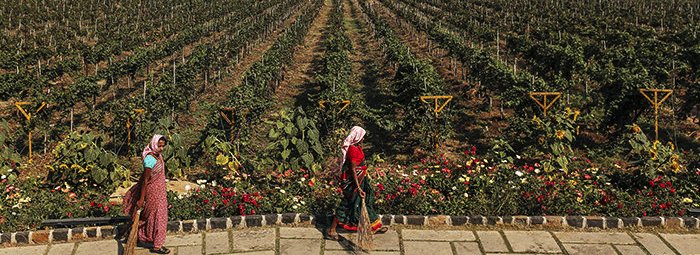
You see, my wife and I have spent the past few weeks in southern India (avoiding the Swedish winter). We thought that in the final couple of days we might visit a couple of wineries, near Bangalore, since India is not well-known as a wine-producing nation, and thus might be interesting (6 vineyards in India every wine lover must visit). Here, I report on our experiences.


Grover Zampa Vineyards

The first one we chose was Grover Zampa Vineyards, which was recommended in our guide book. It was a Monday, and their web page indicated that they had guided tours / tastings at 10:30am, 12:00pm and 2:00pm on weekdays. We tried to confirm this by phone, but all we (eventually) got at the listed phone number was a very excitable woman, who passed us on to a man who had no information.

So, we turned up at 11:00am. The man at the gate asked us to sign in (common in India, a very security-conscious country), but he said nothing about whether the winery was actually open that day. We got to the reception area, and were finally told that there were no tastings or tours that day. Apparently, they were “cleaning” something. We expressed our disappointment, both for the outcome and for the fact that there had been no way to find this out without a 1.5 hour drive.

My wife attempted to use their toilet facilities, but merely encountered the excitable woman, who seemed rather angry at my wife’s presence. After some yelling from the nearby males, my wife found some passable facilities, and used them. We then left, after being told that we could buy some wine if we wanted to. We declined!

I have visited wineries in many countries, on several continents, including Australia (many regions), Sweden, the USA, the UK, France (several regions), Italy (several regions), Spain, Portugal, and Germany. Never have I encountered this situation elsewhere. Maybe this makes me fortunate? Anyway, all other visited wineries of my experience score 4.5 or 5 out of 5 but, in my annoyance, I am tempted to give Grover Zampa a score of 0.


Domaine Sula

The next day, we tried India’s best-known wine company (Sula Vineyards), which has one of its wineries, Domaine Sula, near Bangalore. Their web page indicated that they had guided tours / tastings every hour from 10:30am. So, we turned up at 11:30am on the Tuesday.

Sadly, no sooner had my wife paid for our tickets than she doubled over in pain. She struggled back to the car and lay down for a while, during which she started vomiting. To cut a long story (5 hours) short, a year ago she had a kidney stone, and now seemed like a repeat episode. For those of you who have never experienced this, be very very grateful. Waves of severe pain come over you periodically, and it is this that induces the vomiting.

A very good friend organized for us to be received at a nearby hospital (run by his aunt), where my wife got an ultra-sound followed by a CT-scan. These confirmed our preliminary diagnosis. She eventually got some painkillers, and was told that, with some medicine, she would be able to travel back home on our scheduled flight, early the next morning. We did, however, never get near the actual winery. When we asked about getting our money back they declined, but said that we could use the money as credit against the purchase of some wines. We declined!

During this episode, I learned that the expression “heart-breaking” is not just a fantasy of romantic novelists, as I felt it every time my wife (literally) cried out in pain. I also learned that neither is the expression “joyous” just a fantasy of those same novelists, because I certainly felt it when my wife laughed again later in the same day. A quarter-century of marriage has had some effect on me!


Conclusion

India is not a well-known wine-producing region, and there is a reason for this. Not only is the climate wrong, it is apparently not an easy task for international wine lovers to sample the local produce, in situ. You can try to get some of the wine in your local shop, if you want, but do not venture further!


PS. Things only half improved on the flight home, with Emirates. On the second leg, the so-called "entertainment” system did not work for my seat. Should I start to feel that the world is against me, just at the moment?

Well, obviously not. After all, the rest of the holiday was very good for both my wife and I; and we are very grateful to the people who helped to organize it, and who helped run it. Our driver was excellent, as were the people at the hospital. The people we met on our travels were all friendly, both tourists and locals. Indeed, when we were the only obvious foreigners around, we were often asked to appear in many selfies, or photos with family members (or were simply asked by young people where we were from) — now we know how celebrities feel. Our good friend Ajith is to be thanked many times over, both for proposing the holiday and for looking after us. Interestingly, the only part he was not involved in was the visits to the wineries!

Monday, September 19, 2022

We all know that there is Pay-for-Play in wine reviews

Jason Wilson recently suggested that Wine media is broken, because of kickbacks associated with wine reviews. His contention is that the monetization of published wine reviews is not always transparent to the end-user. As an example, he notes:
The president of a major public relations agency, one with a client list that includes wine regions, big brands, and importers, told me that his firm pays “about $25,000 a year” to a certain influential wine publication. This was not for advertising purposes, he said. Instead, this fee was “to ensure that our clients’ wines are reviewed” and to make sure “poorly reviewed wines aren’t listed” in critics’ tasting reports. That’s what he alleged. This “about $25,000” fee also allows the agency and its client to see reviews two days in advance of publication date, he said. He insisted that his firm is not the only one who pays this kind of fee to this publication.
Unfortunately, the general idea of making special payments in return for a favorable wine-review environment in a particular publication has long been reported. Indeed, it has been reported repeatedly by commentators for a couple of decades, now. There is, indeed, nothing new under the sun.

For example, back in July and September 2006, William R. Tisherman (under the pen name W.R. Tish) wrote two columns (Off the Vine) for Wines & Vines magazine: Glossy buying guides: Getting past the smoke & mirrors, and Dare we critique the critics? Why not? (Thanks to Bob Henry for providing me with copies of the original publications.) Tisherman notes that the tasting of wines for glossy magazines is only one facet of the wine-rating process, quite separate from the way that the results are presented in the magazine — and this distinction changes everything.

He looked at Wine Spectator, Wine Enthusiast, and Wine & Spirits, and was very critical about their lack of transparency, in terms of what was reviewed, and how. He was also very clear about the fact that Wine Enthusiast and Wine & Spirits used label reproductions to generate revenue — that is, the wine supplier paid to have the label displayed next to their reviewed wine. This effectively became a (relatively cheap) means of advertising for the wine suppliers; but this fact was not disclosed to the magazines’ readers. His bottom line, was that: "there is more to wine magazines than what's on the page."


As a different type of example, in December 2012, Gary Thomas (Wine review editor for Palate Press) and David Honig (Palate Press’ publisher) produced an article in Palate Press (Well known writer has “pay-for-play” wine review scheme), accusing Natalie MacLean of republishing other professional writers’ reviews without prior authorization (i.e. intellectual property theft), and requiring wineries to purchase a subscription to her online wine review pages before she would review the wines (ie. a “pay-for-play” policy).

Jamie Goode responded to this 2012 article on his own blog, The Wine Anorak (Pay-to-play and wine writer ethics). He put his finger on the actual problem, in practice:
In the case of my blog, if I operated a similar policy, the net effect would be that you’d be exposed to less interesting wines. Most of the world’s interesting wines are made by smaller producers who, in many cases, couldn’t afford to, or wouldn’t be interested in paying to have their wines reviewed. My content would become dull, and I’d lose the trust and enthusiasm of my readers. I might make some money in the short term, but in the long term I would suffer.
So, people who review wine cannot always speak their minds about those bottles that are less than stellar, or even are undrinkable. They must keep negative thoughts and comments out of their writing and away from the public, because to do otherwise means that their sources of free wine will dry up. I suspect that very few professionals, or others who review wine, are not subject to this self-censorship. (The few who refuse to be censored are often very vocal about their own moral attitude.) This is, of course, not helpful to the wine-drinking public. Reviews (and ratings) are thereby not among the most reliable for selecting bottles of wine.


It has been pointed out to me privately that:
The baked-in favoritism (if not corruption) * all began when magazines started selling label reproductions [adjacent to “Buyer’s Guide” section reviews] and not defining/marking them as ads. In the early years, such labels helped wines stand out. This was expected to be financed by the wine producer; and refusal to pay meant that the review ran (unadorned by a label reproduction) in the magazine’s back pages of the “Buyer's Guide”. Over the years, it became easy, and lucrative, for magazines not only to pre-release their “high ratings” to potential clients, but also to actually not publish ratings in some cases.
In such manner could the wine-industry review scheme become what looks like a racket. The reviewers are damned if they do and damned if they don't — pay-for-play can exist, but not everyone can use it.

Finally, this pay-for-play phenomenon is not restricted to wine reviews, of course. For example, the LA Times has recently pointed out: How food influencers can make or break restaurants. Their quoted US$10,000 is an awful lot to pay a single individual for a favorable Instagram post!


* The AAWE Facebook page recently noted that there has been only one officially recorded incidence that might be considered to be bribery, this century (There are a few large offenders in the U.S. wine industry that have been fined millions of dollars for various violations). I will look at this topic next week.

Monday, November 15, 2021

Are alcohol-free wines drinkable (by wine drinkers)?

We have recently been told that the biggest growth segment in the wine industry is low-alcohol and alcohol-free wines (Rising trend: low alcohol and alcohol free wine). Estimates of growth over the past few years are in the region of  25% (Trend towards low and no alcohol gathers pace, outstripping overall wine category) to 33% (The majority of non-alcoholic drinkers in the US also buy booze) and on to 45% (Low- and no-alcohol category gets a boost from consumer wellness trends).

This does not, of course, mean that such wines are taking over the industry, as the segment apparently still accounts for less than 1% of the market (Non-alcoholic beer, wine and drink sales soar as quality improves). However, this does mean that the current state of the art is worth looking at.


Low-alcohol wines seem to include everything that is below the common alcohol concentration for any given wine type — eg. <11% ABV for reds and <10% for whites. This seems more like “lower” rather than “low”. It is often achieved, in practice, by choosing grapes from varieties that naturally produce wines with the desired alcohol level (eg. Gamay, Riesling, Moscato, or the Vinho Verde varieties such as Alvarinho).

Alcohol-free wines are another thing entirely. Here, we need to remove the alcohol from the fermented grape-juice, getting it to <1% ABV — without impairing the expected wine sensory perception, including mouth-feel (texture), balance (acidity), and typicity (aromas and tastes).

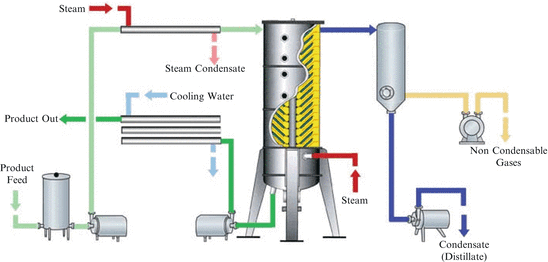
On the face of it, this seems to be a hopeless task. What we do first is convert the grape sugar into alcohol (by fermentation); and then we try to remove that alcohol from the resulting juice (eg. by spinning cone technology, or by reverse osmosis). It seems to me that this is likely to leave us with strange-tasting sugar-free grape juice.

Apparently I am not the only one to think this (What are the opportunities for the no- low-alcohol wine category?): “The consumer data collected by Wine Intelligence over the past 5 years has been telling a similar story: no- and low-alcohol wine is a good idea in theory, but consumers are often disappointed by the taste profile of products in these categories”.

So, some manufacturers subsequently add a bit of grape concentrate at the end (eg. 5%), in an attempt to improve matters; and some makers even add a bit of flavoring, and even gum arabic for texture. All of these things can be produced organically, of course, so that the resulting alcohol-free wine can legitimately be labeled “organic”. Mind you, I have noticed that several wineries do not actually mention their alcohol-free wines on their websites!

However, would a wine drinker want to drink the result? This is a question I asked myself recently; and I decided to find out. [Updated: 18-Nov-21.]


To find out empirically, I bought most of the wines available in my local Swedish liquor chain (Systembolaget), as well as my local supermarket (ICA), which cover a range of styles, and a range of prices (40 unique brands). I expect these wines to be representative of those available elsewhere, and many of them are also available in other countries. None of them are actually made here in Sweden, although they are quite popular here — for example, the data on Exports of Australian reduced alcohol wine by market show that 47% of their total goes to Sweden.

My long-suffering wife and I then drank all of them, one per day. Here, I report on the results, which are summarized in the table at the bottom of this post. Our thoughts focus on the taste, because without alcohol there is not much aroma. Interestingly, the amount of residual alcohol (0%—0.5%) seemed to make no difference to the wines.

Starting with the reds (9 wines), all of them tasted awful, although the Domaine de la Prade is drinkable. They all tend to taste the same, irrespective of grape or geographic origin — that is, they taste like grape juice, not wine. The producers describe this as “bursting with bright red fruits”! It's like discovering that all of red-wine diversity has been reduced to Beaujolais Nouveau. There is nothing wrong with Beaujolais Nouveau, but there is more to red wine than solely this. Interestingly, like Beaujolais Nouveau, the wines do taste better chilled.

The whites (9 wines) are definitely a step up, as they can handle the grapey fruitiness, by being chilled. However, they also tend all to taste the same, irrespective of grape or origin — they do not taste anything like the nominated grape, unlike wine. This is not to say that they are not a refreshing beverage, of the simple and fruity type (although the Santa Monica was a bit acidic).

The rosé drinks (5 wines) are very similar to the whites, and thus similar comments apply. In this case, for the cheap alcoholic versions, no-one expects rosé to taste like any particular grape; so, the lack of diversity is no surprise. You would not, however, mistake any of these for a real rosé.

This brings us to the sparkling versions (17 wines). These are far and away the best of the segment. The bubbles can handle the grape fruitiness, by cutting through it. They are all carbonated, of course, and the cheapest ones go flat fast. However, as a refreshing aperitif, or even with a meal, most of these are quite acceptable. In terms of flavors, they tend to taste more like pear or apple than anything else. However, the top-7 in terms of price were a step above this, and actually tasted a bit more like wine.

I am not the first to note that the sparklings do better than the others ( “the carbonic acid provides freshness and mouthfeel”). Indeed, it is reported that Brut sparkling wines demand to dominate, yielding a third of the global revenue share.

How to de-alcoholize wine

Overall, I remain unimpressed. Alcohol-free wine may be good for your health, but that does not make it is good for your taste buds. It has been reported that quality is increasing (Pleasure without remorse: the best non-alcoholic wines; Best non-alcoholic wine 2021), and I hope so.

However, I would probably much prefer just to drink fresh fruit juice, rather than trying to consume doubly-processed grape juice. After all, making wine and then de-alcoholizing it is more complicated than just making the wine in the first place, and yet most alcohol-free wine is less expensive than its alcohol-containing counterpart — that should give you a hint about what to expect in terms of quality.

To test the idea of preferring fruit juice, I also purchased two of the ones in wine bottles, available on the same shelves in the shops:
  • Azienda Iris P.Lex Pure Sparkling Glera (Italy; $7.50) (carbonated grape juice)
  • Le Petit Béret Organic Chardonnay (France; $10.25) (grape extract, grape juice, apple concentrate)
These both tasted like grapes, although the latter had a hint of apple. They were the equal to fruitiness of the de-alcoholized whites.

We tasted all of these wines so that you don’t have to. The best summary is indicated by my wife's expression of relief when she got a real wine with her dinner, after five evenings of drinking the de-alcoholized stuff (and several more nights afterwards). If I want grape juice, I will just buy unprocessed grape juice. If I want still wine, then in order to cut down on my alcohol intake I may be better off choosing ones that are naturally lower in alcohol (eg. Gamay, Alvarinho). However, the top-level sparkling wines would probably pass muster even with a (co-operative) wine-preferring guest.


Producer
 
Reds
Jacob’s Creek
Carl Jung
Les Grands Chais de France
Enjoy Wine & Spirits
Treasury Wine Estates
Sommestad & Malmnäs
Oddbird
Edenvale
 
Whites
Carl Jung
Henkell Freixenet
Casa de la Ermita
Miguel Torres
Enjoy Wine & Spirits
Treasury Wine Estates
Jacob’s Creek
Josef Leitz
Edenvale
 
Rosé
Carl Jung
Jacob’s Creek
Reh Kendermann
José Maria da Fonseca
Josef Leitz
 
Sparkling
G. Patritti
Henkell Freixenet
Henkell Freixenet
Les Grands Chais de France
Treasury Wine Estates
Arc-en-Ciel
Enjoy Wine & Spirits
Henkell
Oddbird
Pernod Ricard
Domaine Wines
GodDryck i Sverige
GodDryck i Sverige
Oddbird
Oddbird
GodDryck i Sverige
Wine name
 
 
UnVined red
Carl Jung
JP Chenet So Free
Barrels and Drums
Lindeman’s
Rawson’s Retreat
Cognato
Domaine de la Prade
Premium Reserve
 
 
Carl Jung
Chapel Hill
Santa Monica
Natureo
Barrels and Drums
Lindeman’s
UnVined white
Eins Zwei Zero
white
 
 
Carl Jung Rosé
UnVined Rosé
Black Tower Rosé
Periquita Rosé
Eins Zwei Zero
 
 
Billabong Brut
Chapel Hill
Chapel Hill Rosé
Nozeco
Lindeman’s
Rawson’s Retreat
Rosé Mousseux Brut
Barrels and Drums
Mionetto 0.0%
Spumante
Campo Viejo Gran 0%
Richard Juhlin Blanc de Blancs
GodDryck No 1 Sparkling White
GodDryck No 2 Sparkling Rosé
Rosé
Blanc de Blancs
GodDryck No 1 Prestige Cuvée
Grape(s)
 
 
Shiraz
Merlot
Cabernet sauvignon + Syrah
Merlot
Cabernet sauvignon
Cabernet sauvignon
Cabernet sauvignon + Cinsault
Merlot + Shiraz
Pinot noir
 
 
Chardonnay
Chardonnay
Viognier + Macabeo
Muscat
Chardonnay
Semillon Chardonnay
Mostly Riesling
Riesling
Pinot gris
 
 
unspecified
Shiraz
Grenache + Tempranillo + Syrah
Syrah
Pinot noir
 
 
unspecified
unspecified
unspecified
unspecified
Chardonnay + Pinot noir + Muscat
Grenache
Chardonnay
Glera
Glera
Xarel-lo + Macabeo + Parellada
Chardonnay
Sémillon + Airén + Sauvignon blanc
Cabernet sauvignon + C. franc + Merlot
Chardonnay + Pinot noir
Chardonnay
Chardonnay + Sauvignon blanc
Source
 
 
South-eastern Australia
Germany (Spain)
France
Germany (Spain?)
South-eastern Australia
South Africa
France
South-eastern Australia
 
 
Germany (Spain)
Hungary
Spain
Spain
Germany (Spain?)
South-eastern Australia
Germany
South-eastern Australia
 
 
Germany (Spain)
South-eastern Australia
Germany (Spain)
Portugal
Germany
 
 
South-eastern Australia
Hungary
Hungary
France
South-eastern Australia
France
Germany (Spain?)
Italy
Italy
Spain
France
Spain + France
France
France
France
Spain + France
Alcohol
ABV
 
0.5%
0%
0.3%
0%
0%
0.5%
0.5%
0%
0.5%
 
 
0%
0%
0.5%
0%
0%
0%
0.5%
0%
0.5%
 
 
0%
0.5%
0%
0.5%
0%
 
 
0.3%
0%
0%
0.4%
0%
0.5%
0%
0%
0%
0%
0%
0%
0.2%
0.2%
0%
0%
0%
USD
 
 
$4.50
$5.00
$4.50
$6.50
$6.50
$6.75
$8.00
$10.25
$11.50
 
 
$4.75
$4.75
$6.50
$6.50
$6.50
$6.50
$6.75
$8.00
$9.25
 
 
$4.75
$5.75
$5.75
$5.75
$8.00
 
 
$4.50
$5.00
$5.25
$5.75
$6.75
$7.00
$7.00
$7.00
$9.25
$9.25
$10.25
$10.25
$10.25
$10.25
$11.00
$11.00
$14.00